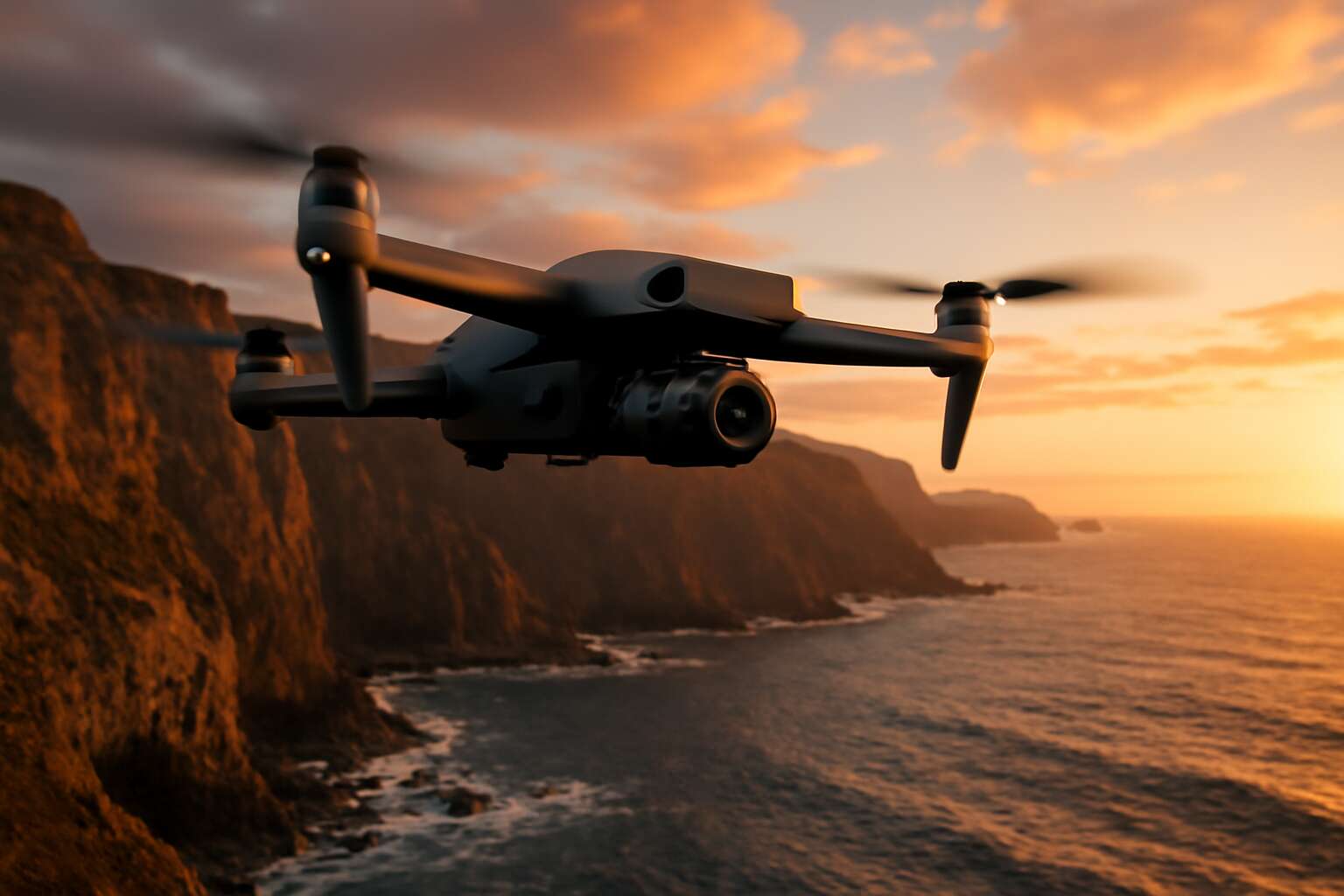
Understanding top features that define high-quality camera drones
Resolution, sensor, and image quality benchmarks
Across South Africa’s wind-chiseled coastlines, the edge between a snapshot and a memory lies in what the sensor refuses to betray. The camera drones best performances hinge on more than resolution; they hinge on how the sensor preserves texture in light and how the image survives when the sun dives behind a ridge. Benchmarking resolution, sensor size, and image quality becomes the quiet art of choosing a drone that can tell a clear, moody tale under African skies.
Here are the benchmarks that let the story breathe without distortion:
- Resolution and frame rates (4K at 60p or higher)
- Sensor size and pixel pitch (larger sensors capture more light)
- Dynamic range and color fidelity (true-to-scene tones across highlights and shadows)
Under SA’s dramatic light, these metrics shape what can be remembered from above. They determine how a frame from above becomes a memory, a quiet, moody glow preserved in the mind long after the rotor noise fades.
Gimbal stability and flight performance
Across South Africa’s wind-chiseled coastlines, 7 out of 10 frames hinge on gimbal discipline more than sheer resolution. Gimbal stability and flight performance steer experiences, letting texture hold under harsh light and horizons stay calm when gusts roll in. It’s the quiet physics of motion that turns a snapshot into a memory.
For those chasing the camera drones best performance in real settings, stability isn’t just a feature—it’s a language of control. The core features that preserve a scene are not just motors, but how the stack forgives wind and follows your subject with grace. I watch this play out on every shoot.
- Gimbal architecture and motion smoothing
- Wind handling and low-amplitude vibrations
- Subject tracking integration with stabilization
Let the light tell its story while the craft remains poised—trustworthy flight performance is the backbone of enduring imagery.
Battery life, charging, and endurance
Endurance decides the shot list. Across South Africa’s sun and wind, the best flights hinge on power margins, not just pixel count. The camera drones best performances come from staying aloft when the scene demands it!
We measure battery life in flight minutes, charging speed, and how energy is managed midair. For the camera drones best routes, plan around power-aware routines and avoid unnecessary payload.
- Flight time under typical wind and payload
- Charging speed and cycle options
- Battery health monitoring and chemistry
Endurance also hinges on planning and terrain. Real SA shoots show that disciplined power management keeps scenes stable even as light shifts. The result is a calmer flight and sharper imagery—the mark of the camera drones best in practice.
Portability, setup, and payload compatibility
Portability isn’t a luxury; it’s a passport to South Africa’s sunlit horizons. The camera drones best configurations fold, slip into a compact case, and are flight-ready in moments, letting crews pivot from veld to city without a wardrobe change for their gear. As one veteran aerial director quips, “Portability is the quiet engine of a credible shoot.” I’ve watched teams chase light and end up with sharper frames because the gear behaved as promised.
- Foldable frames and light airframes for easy transport between remote shoots
- Simple, reliable setup with quick-connect components and clear status indicators
- Payload compatibility and modular mounts to swap cameras and accessories on the fly
Beyond hardware, these features speak to on-film choreography: you want a drone that trusts your plan and your patience, not a diva that demands a trailer. A touch of engineering polish keeps tilt smooth, wind handling reasonable, and shadows exactly where you want them.
How to compare camera drones: essential specs to prioritize
Sensor size and video formats
Footage that earns a second look starts with the sensor size and the cadence of its video formats. The right balance cuts through dusk and dust, turning ordinary shots into stories. The camera drones best options hinge on how they handle light, color, and codec decisions that ripple through the entire SA workflow.
- Sensor size choices (1-inch, Micro Four Thirds, APS-C) and their effect on low-light performance
- Video formats and codecs (H.265, ProRes/RAW, 10-bit vs 8-bit) and how they fit editing workflows
- File sizes, bitrate, and storage considerations for field work
In South Africa’s diverse landscapes—from coastal cities to open savannahs—these choices keep footage flexible, avoiding heavy grading later and aligning with local production standards.
Autonomy features: obstacle avoidance, GPS, return-to-home
“Reliability is the new resolution,” a veteran SA operator says. When you compare camera drones best options, autonomy features decide long-term value more than raw speed or flashy specs. Obstacle avoidance, precise GPS, and dependable return-to-home are the guardrails that keep flights safe in SA’s winds and dusty trails. Look for sensors that give you real-time awareness and a stable fail-safe profile that kicks in before you need it!
- Obstacle avoidance: multisensor systems that detect and dodge obstacles in complex terrain
- GPS and return-to-home: reliable geofencing, precise RTL, and automatic landing options
- Fail-safes and battery-aware planning: smart auto-land, low-battery auto-RTL, and redundancy in critical paths
Pair autonomy with solid flight planning and robust software updates, and you gain consistent clips across coastal mornings and savannah afternoons. These choices simplify field work, reduce re-flights, and fit the budgets of agile South African crews.
Weight, portability, and regulatory considerations
Weight is the first test every camera drone must pass. When chasing the camera drones best, you judge value by weight, portability, and regulatory readiness—not by top speed alone. “Weight is the silent bottleneck,” a veteran SA operator says, and he’s right: lighter rigs breeze through coastal gusts and dusty trails with fewer compromises.
In conversations about weight, portability, and regulatory readiness, several factors surface:
- Compact foldable form factors that tuck into a daypack
- Stiff, lightweight materials that don’t buckle under a breeze
- Regulatory readiness: straightforward geofencing, documentation, and SA-compatible certifications
These cues keep you nimble for day-break coastal shoots and high-sun savannah days, making the search smarter and cleaner.
Price, value, and total cost of ownership
Chasing the camera drones best means looking beyond the sticker price. A veteran South African operator puts it plainly: “The real cost is what you spend over the life of the rig.” Price is a starting point; the true measure is total cost of ownership, including maintenance and downtime.
Here are the factors that determine value over time:
- Upfront price versus included capabilities
- Battery costs and replacement parts
- Warranty terms and local service networks
- Insurance, licensing, and regulatory costs
In South Africa, the practical cost hinges on support networks and after-sales parts availability, not just the sticker price.
Budget-friendly, mid-range, and pro-level options for camera drones
Best under $500: entry-level shooting capabilities
In South Africa’s buzzing production scene, one stat stands out: camera drones best under $500 can redefine entry-level shooting capabilities. They aren’t toys; they’re springboards for stories.
Budget-friendly options prize portability and ease of use. You’ll find straightforward controls, reliable stabilization, and decent video at 2.7K or 1080p—perfect for quick turnarounds on location.
- Low weight and compact folding designs for fast transport
- Simple auto modes that deliver publishable footage
Mid-range options deliver steadier footage and longer flights, widening the creative window without breaking the bank.
- 3-axis gimbal for smoother pans
- 20–30 minutes of flight on a single charge
- Improved wind stability and GPS positioning
Pro-level options under $500 push toward cinema-like capabilities—4K capture, richer color profiles, and smarter obstacle awareness—giving seasoned shooters a versatile tool for professional tasks.
- 4K video at practical frame rates
- Advanced color modes with more dynamic range
- Enhanced obstacle avoidance and return-to-home reliability
Mid-range performers: balance features and cost
Among the camera drones best picks for first-time shooters in South Africa, budget-friendly options shine. They slip into a daypack and follow you from city mornings to windswept coastlines with ease. The experience feels almost magical as you capture candid moments without a steep learning curve.
- Foldable frames for easy transport
- Intuitive modes that unlock instant results
Mid-range performers balance features and cost, widening your creative window without breaking the bank. They deliver steadier footage and better wind resistance, extending on-location shoots when time is tight.
Pro-level options under $500 push toward cinema-like capabilities, offering richer color and smarter safety nets. They invite seasoned storytellers to craft scenes with mood, scale, and nuance across SA’s diverse landscapes.
Pro-grade picks for cinematic quality
South Africa’s storytellers know the best stories travel light. The idea of camera drones best is about gear that vanishes in a backpack while lifting your vision. Budget-friendly picks slip into a daypack and chase you from city mornings to windswept coastlines, offering foldable frames and intuitive modes that unlock instant results.
Mid-range performers balance features and cost, widening your creative window without breaking the bank. They deliver steadier footage and better wind resistance, extending on-location shoots when time is tight.
- Robust stabilization for smoother pans
- Quicker setup and easier controls
Pro-grade picks for cinematic quality—surprisingly approachable—often hover under $500, pulling seasoned storytellers toward mood, scale, and nuance. They offer richer color, smarter safety nets, and portable design, inviting you to craft scenes across SA’s diverse landscapes with confidence.
Specialty models: travel-friendly and rugged builds
A great shot travels light, and budget-friendly quads prove it. Under SA price points, these drones fold flat and deploy quickly, letting you chase sunrises along the coast or city mornings with ease. These are camera drones best for entry-level shooters.
Mid-range performers strike a balance between features and cost. They push beyond basic stabilization, deliver steadier footage in breezes, and extend shoots when time is tight.
Pro-grade picks for cinematic quality remain approachable, packing robust stabilization, wind resistance, and smarter color profiles into a compact frame. They keep footage smooth on location and reduce setup friction for busy shoots. These are camera drones best for turning ambition into impact.
Specialty models lean travel-friendly and rugged builds. They fit in a daypack, shrug off dust and drizzle, and pair with quick-charging batteries.
- Folds flat
- Weather-sealed motors
- Swappable batteries
Best uses and task-specific recommendations for camera drones
Aerial photography basics: landscapes and architecture
On the wind-swept plains of the Karoo and in the glassy canyons of our South Africa cities, camera drones best reveal the heartbeat of a place. ‘The sky is the original wide-angle lens,’ a veteran aerial photographer once told me, and that line lands with color along horizon and façade. Landscapes and architecture become a narrative when a drone circles with patient grace.
Best uses hinge on context: for landscapes, capture broad panoramas that convey scale without losing detail; for architecture, chase clean lines, precise perspective, and the interplay of shadow and light. Task-specific choices lean toward stable gimbals, measured speed, and sensors that render stone and sky with equal fidelity.
Suitable applications include the following:
- Coastal and savannah panoramas that tell a region’s story
- Urban skylines, iconic bridges, and historic landmarks
- Rugged travel shoots where durability matters
Cinematic video and storytelling techniques
Sky is the opening frame, shaping mood across South Africa. Aerial footage can shave shoot days—some projects report up to 40% fewer hours on location. For camera drones best, cinematic video and storytelling hinge on rhythm, light, and patient motion, letting landscapes and architecture reveal their heartbeat from a calm orbit above the horizon.
Best uses hinge on context: landscapes crave broad panoramas that keep detail; architecture rewards clean lines and precise perspective, with light playing off stone and glass. Task-specific choices favor stable gimbals, measured speeds, and sensors that render sky and subject with equal fidelity.
- Stability-first: robust gimbal, slow, controlled motion
- Dynamic range: balance highlights and texture
- Framing: emphasize lines, rhythm, and negative space
Industrial and inspection applications
Industrial and inspection work in South Africa’s sprawling landscapes demands a quiet observer—stability, endurance, and an eye for detail. For camera drones best suited to industrial inspection, stability is the first virtue: a robust gimbal, slow, controlled motion, and a platform that resists gusts as it hovers above critical joints. The payoff is a clean ledger of welds, bolts, and heat-streaks across power stations and wind farms.
- Structural and facility inspections benefit from precise framing, preserving line quality on steel beams and concrete joints.
- Thermal imaging and high dynamic range help spot insulation gaps and energy losses in industrial complexes.
- Long-range surveys along pipelines or rail corridors require endurance, reliable GPS, and robust return-to-home.
Task-specific choices favor measured speeds, calm trajectories, and payloads that balance detail with distance—turning vast sites into readable maps and revealing the heartbeat of structures beneath the surface.
Vlogging and live-stream friendly setups
Across South Africa’s diverse landscapes, a single frame can decide the story. Real-time streams from the field shorten decision cycles by up to 40%, turning on-site footage into strategic insight. For vlogging and live-stream friendly setups, the camera drones best for these tasks lean on stability, quiet operation, and dependable transmission that keeps crews engaged from Cape Town to the Highveld.
Here are task-friendly traits that elevate vlogging and live streams in SA contexts.
- Lightweight, foldable bodies for travel across cities and remote sites
- Low-latency, reliable transmission for real-time interaction
- Robust gimbal and wind resistance for steady shots on gusty days
- On-board audio options or simple external mic compatibility for clear narratives
Ultimately, these form factors translate vast vistas and urban textures into intimate broadcasts that resonate with audiences and clients alike. Suspenseful visuals emerge from calm motion and measured framing, turning every clip into a chapter.
Maintenance, safety, and legal considerations for camera drones
Pre-flight checks and safety best practices
In a sky crowded with options, a missed maintenance check can turn a promising shoot into a scramble—40% of near-misses trace to skipped checks in the field. Proper upkeep preserves stability, image quality, and safety for every mission with camera drones best in a South African context.
Legal and safety matters loom large: respect privacy, observe airspace, and stay current with local rules so operations remain above reproach. When in doubt, transparency and due diligence keep the narrative clean and credible, ensuring each flight upholds professional standards and public trust.
- Regulatory and privacy considerations relevant to South Africa and the region
- Maintenance, firmware, and insurance alignment to local standards
- Flight readiness, weather awareness, and data handling protocols
These elements form the backbone of responsible flight, turning risk into rhythm and ensuring the best possible outcomes for every camera drone mission.
Care, maintenance, and component longevity
Across South Africa, the difference between a successful shot and a scramble is maintenance. The camera drones best endure heat, dust, and duty only when nightly checks, firmware sanity, and component longevity become habits, not afterthoughts. Respect for the craft means treating upkeep as a moral obligation to safety, image quality, and professional credibility in every mission.
- Compliance with South Africa’s airspace rules and privacy expectations
- Maintenance cadence, firmware alignment, and insurance requirements
- Flight readiness, weather awareness, and data handling protocols
These commitments translate into reliable performance and public trust, turning risk into rhythm whenever drones operate in real-world environments.
Airspace rules, licensing, and compliance
Safety is a habit, not a checkbox. A veteran operator once quipped, “Safety first, payload second” — and it still lands. Camera drones best results come from disciplined maintenance and respect for the rule of law, not heroic improvisation.
In South Africa, airspace rules and licensing aren’t optional; SACAA governs permits, remote pilot licenses, and drone registrations. Compliance with privacy expectations and insurance requirements is part of professional credibility, especially when filming in urban or sensitive environments.
- Airspace rules and licensing alignment
- Insurance coverage and liability
- Privacy and data handling commitments
When maintenance, safety, and legal considerations braid together, you trade risk for reliability and public trust, letting the camera drones best performances fly with confidence.
Accessories and add-ons that boost performance
South Africa’s skies are alive with possibilities, from the Karoo’s wide horizons to urban rooftops. I’ve learned the camera drones best results come from daily care, disciplined safety, and a respect for the law—the quiet rituals that steady the shot when wind rises and crowds gather.
In the field, maintenance, safety, and legal considerations form the spine of every flight. Regular calibration, firmware updates, and battery discipline guard against surprises. Compliance with SACAA permits, remote pilot licenses, and privacy expectations preserves trust.
- Regular maintenance checks and component replacements
- Insurance coverage and clear liability terms
- Privacy and data handling commitments
From my experience, accessories and add-ons that boost performance can lift the camera drones best into cinematic reach. ND filters, extra batteries, protective guards, and rugged cases make tough shoots feel calmer and more predictable.

0 Comments