Night Vision Capabilities in Drones
Overview and fundamentals
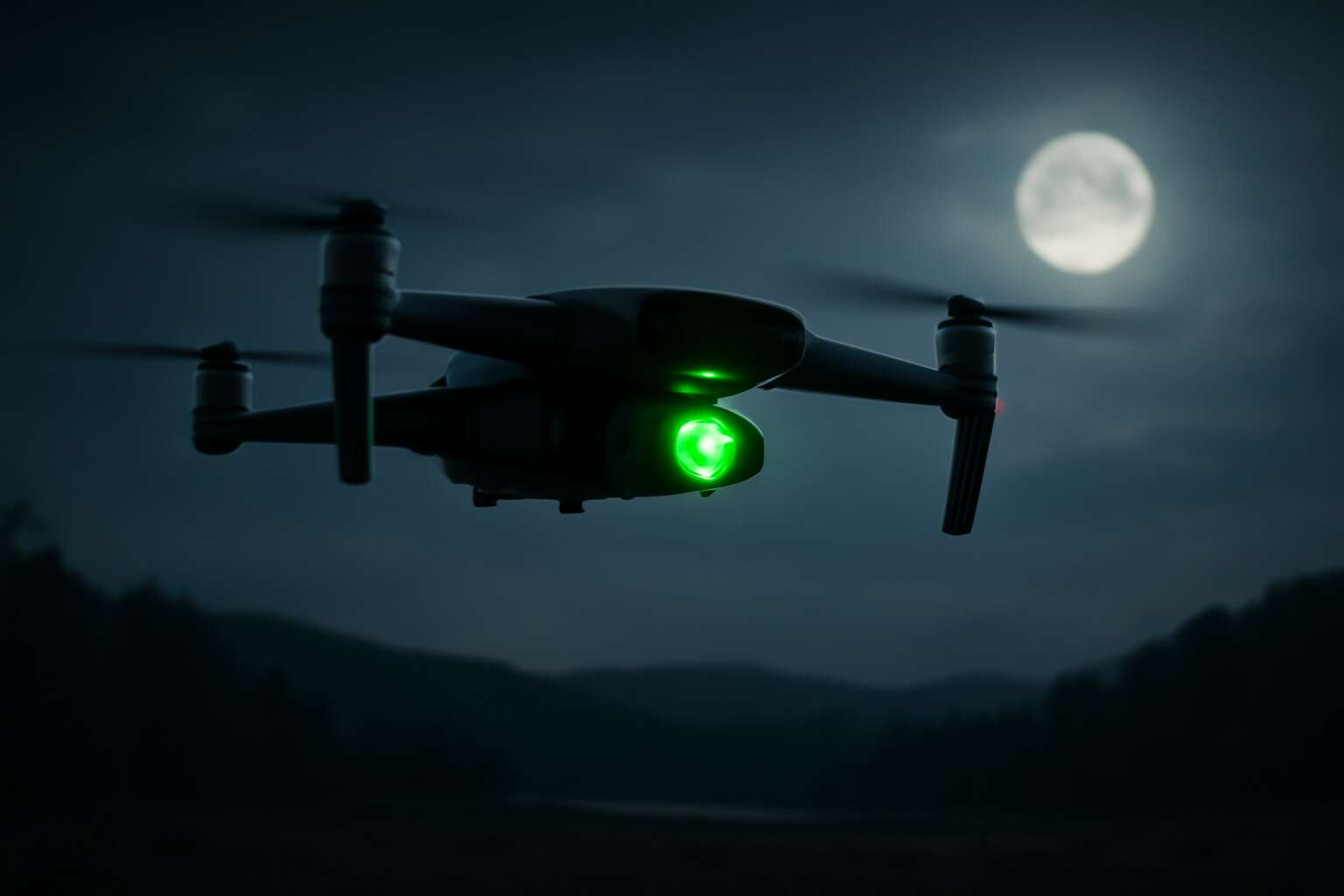
“The night belongs to those who can see in it,” a line I adore as the sky turns velvet. The devices that operate in darkness turn darkness into a living map, empowering search-and-rescue teams, security operators, and field crews to read terrain, track silhouettes, and spot hazards that eyes alone miss. The fundamentals blend light amplification with smart processing, producing usable footage when streetlights fade and stars glare becomes noise to the camera. In practice, drones with night vision translate ambient glow into legible detail.
- Low-light sensor sensitivity that preserves detail at dusk
- Infrared/thermal imaging for heat contrasts
- Image fusion to combine light and heat data
- Gimbal stabilization and noise reduction for clear footage
In South Africa’s varied climates, these systems must handle dust, wind, and changing light. Modern systems rely on stabilized optics, thermal fusion, and on-board analytics to render clear, actionable scenes in real time.
Imaging technologies and sensor types
“The night belongs to those who can see in it.” In South Africa’s velvet dark, drones with night vision turn silence into detail, turning veld and city edges into a map you can trust when stars glare and headlights fade.
Images fuse light and heat through a symphony of sensors. For drones with night vision, low-light CMOS chips tease edges from dusk; infrared cameras reveal heat whispers through dust and wind; on-board analytics stitch the story together, giving crews a clear narrative in real time, even as light slips away.
- Low-light CMOS sensors for dusk-to-night scenes
- Infrared/thermal cameras for heat contrasts
- Image fusion to merge light and heat information
With stabilized optics and compact processing, these systems extend a nocturnal eye across South Africa’s varied terrains, a steady beacon when night closes in.
Operational considerations and best practices
South Africa’s velvet night is no barrier; it’s a layer of potential. In dusk-to-dawn operations, night-capable platforms shave incident localization times by up to 28%, turning challenge into clarity. Drones with night vision turn silence into detail, mapping veld and urban edges when stars glare and headlights fade!
Operational considerations span weather, terrain, and data governance. Light scarcity, wind, and dust test stability; anticipate standby power and secure data links, while staying within airspace rules.
- Regulatory compliance and privacy
- Weather and terrain awareness
- Data security and retention
Best practices emerge from field discipline: maintain optics, calibrate sensors, and respect privacy when operating near communities.
Buying guide and optimization tips
Night is not an obstacle; it’s a terrain feature. In field data, night vision capabilities can extend effective inspection windows by as much as 40%. Drones with night vision fuse starlight enhancement, infrared cues, and smart image processing to reveal detail where darkness once reigned. In South Africa’s landscapes—from velvet veld to city edges—these platforms turn silence into situational clarity, transforming shadows into mapped boundaries. When choosing a model, buyers should weigh sensor sensitivity, dynamic range, and how the system handles noise at higher ISO in damp or windy conditions.
- Sensor sensitivity and dynamic range across varied night scenes
- Thermal versus near-infrared imaging trade-offs and fusion with optical sensors
- Rugged build, dust resistance, and wind stability under practical use
- Data links, encryption, and on-board storage for night operations
That balance defines the true value of night-vision capability in a drone fleet.

0 Comments