Speed fundamentals for camera drones
What is top speed and cruise speed in drone flight
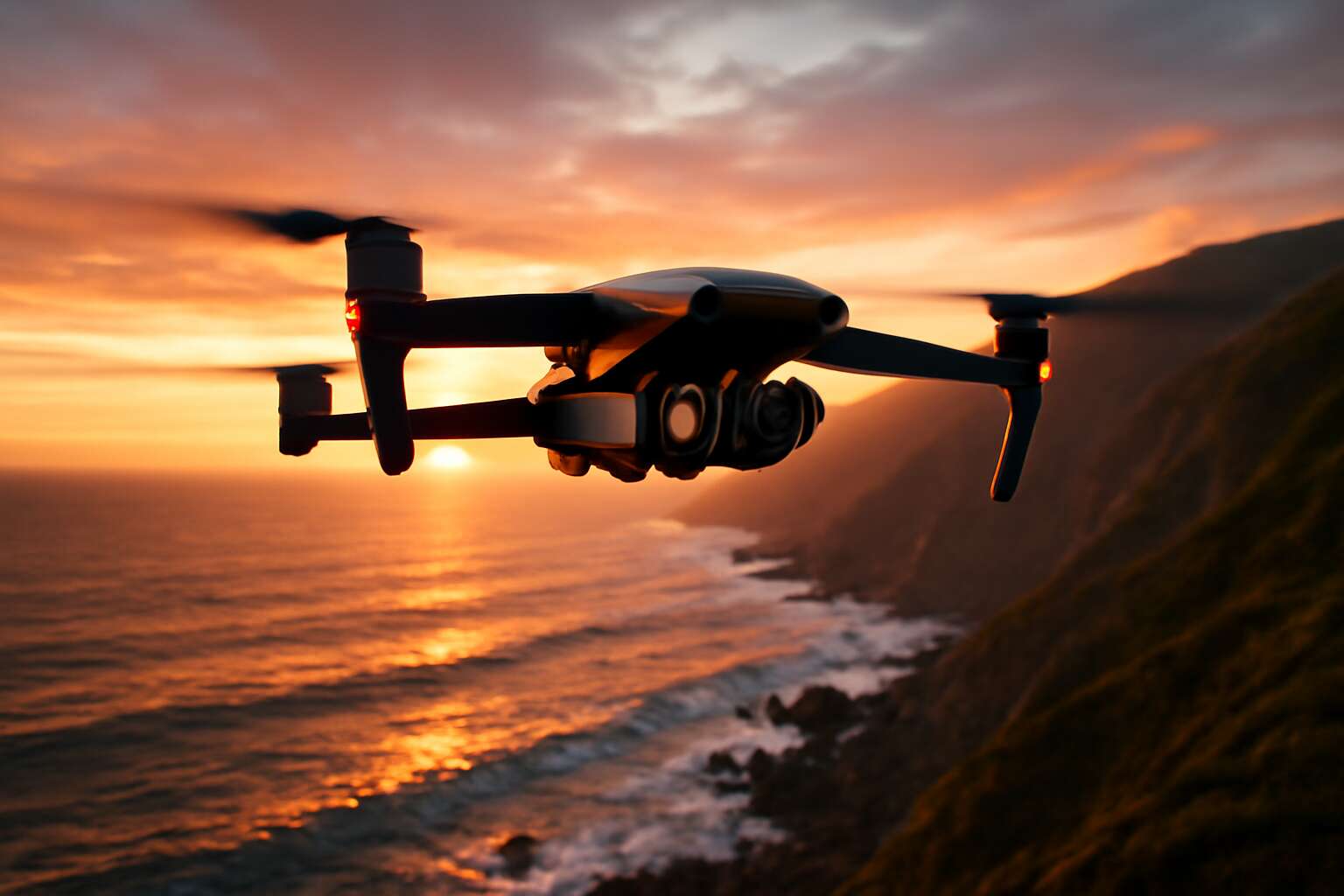
“Speed is the breath of the shot,” a veteran operator once said. In the realm of camera drones, top speed and cruise speed determine whether a clip lands with impact or dissolves into wind-blown blur. Across South Africa’s rugged landscapes, pilots chase precise motion without draining the battery.
When you measure capability, top speed is the absolute ceiling—the car ad of drone flight. Cruise speed, meanwhile, is the steady pace that preserves footage quality and battery life. So, how fast are camera drones in practice? It depends on mode, payload, and conditions.
In real shoots, speed is a trade-off. The following factors push or pull speed in a given framing:
- Payload weight and gimbal load
- Wind and air density
- Battery health and flight mode
- Firmware and motor efficiency
How speed is measured: m/s, km/h, and mph
Speed isn’t a flashy flourish in South Africa’s skies—it’s storytelling. A recent industry pulse shows broadcast-ready drone clips settle into a steady tempo within seconds, roughly 30–50 km/h on screen. So, how fast are camera drones, really? Speed here is a dialogue between motion and stability, not a single number.
Speed is measured in three common ways. M/s, km/h, mph—these are the currencies.
- Meters per second (m/s)
- Kilometers per hour (km/h)
- Miles per hour (mph)
These units translate into on-screen motion; the same airspeed can feel brisk in a 4K frame or calm in a wide shot. Payload, wind, and battery health tilt the readout, reminding operators that numbers only tell part of the story.
Impact of payload on speed
Speed is a storytelling instrument in South Africa’s skies, a lever you pull to shape the viewer’s heartbeat. Consider: how fast are camera drones—in practice, the answer is a dialogue between momentum and the moment you want the wind to feel real.
Speed here is less about raw horsepower and more about choreography. The frame tempo is tuned by timing, frame rate, and how the craft holds steady through turns. External forces—gusts, battery health, and payload—tilt the readout, reminding us that numbers only tell a sliver of the story.
Impact of payload on speed: extra mass doesn’t just sit there; it changes acceleration, endurance, and the drone’s ability to react to gusts.
- Weight raises inertia, dulling quick changes in velocity.
- Center of gravity shifts can sap stability and responsiveness.
- Carrying gear drains battery life, curbing sustained speed.
That balance is the quiet art behind every capable camera drone shot.
The role of wind, altitude, and temperature
Speed in the open South African skies isn’t a straight line; it’s weather-aware choreography. When the wind waltzes around your rig, even the sprightliest camera drone slows to keep balance. On calm days you might flirt with cruise numbers; in a 5 m/s headwind, you’ll lose a chunk of forward velocity. If you’re wondering how fast are camera drones, the answer hinges on wind as much as horsepower.
- Wind profile: gusts and gust duration shift perceived speed.
- Altitude: thinner air changes drag and lift dynamics.
- Temperature: density affects power draw and cooling.
Altitude and temperature add a quiet twist: higher air reduces drag but demands more lift, while cooler mornings boost battery efficiency. In warmer conditions, performance fades a touch as cells work harder and motors heat up.
Cruise vs. acceleration and responsiveness
Speed in the field isn’t a single figure; it’s response time. In practical tests, a well-tuned camera drone can react in about 0.2 to 0.3 seconds to a stick input, keeping framing precise. So how fast are camera drones? The real measure is how quickly intent translates into smooth motion while staying rock solid.
Cruise speed sets the steady, efficient pace for tracking shots, while acceleration is the sprint from rest or after a quick pan. The comfort of that switch comes from a clean power curve, balanced torque, and a flight controller that minimizes latency. When those elements line up, the drone feels agile rather than reactive, and your footage stays clean.
- Motor torque versus propeller pitch balance
- Battery health and current draw
- Flight-controller tuning and latency
Measuring speed in real-world tests
Speed isn’t a single figure—it’s the instant your input becomes motion. In field tests, a well-tuned camera drone can respond in roughly a quarter of a second to a stick nudge, keeping framing sharp even in dynamic shots.
So how fast are camera drones in practice? Real-world pacing is a balance: cruise speed delivers steady, efficient motion, while the sprint from rest relies on a clean power curve, balanced torque, and a flight controller with minimal latency. When those elements align, footage feels purposeful rather than twitchy.
- Motor torque versus propeller pitch balance
- Battery health and current draw
- Flight-controller tuning and latency
Speed ranges by drone category
Consumer drones: typical top speeds
Speed is the wind’s whispered signature on your footage. In the consumer drone category, top speeds mirror the filmmaker’s ambitions and the battery that sustains them. For many South African creators, entry-level machines crest around 60 km/h, while mainstream models breach 80–100 km/h with stable handling. It’s a harmony of weight, propulsion, and design that keeps shots crisp at altitude without a drain on endurance.
For those asking how fast are camera drones, the answer depends on category, conditions, and payload. The upper tier—the hybrid and sport-minded consumer rigs—can push toward high speeds, often 120–150 km/h when wind is favorable and the drone is light.
- Entry-level consumer: ~60 km/h
- Mid-range consumer: ~90–100 km/h
- High-end consumer: ~120–150 km/h
Prosumer and professional camera drones: performance benchmarks
Speed is the wind’s ink that writes motion across the South African sky; even a calm day can become a stage when a drone cuts through air with purpose!
In practice, prosumer rigs drift at comfortable paces, while professional cinema platforms chase every moment with precision.
How fast are camera drones? The answer lives in the category and payload. Prosumer machines typically range from 60 to 100 km/h, with high-end hybrids stepping into 120–150 km/h when the wind is friendly and the frame is light.
- Prosumer / hybrid: 60–100 km/h (often up to 120–150 with light payload)
- Professional cinema drones: 100–150 km/h on standard shoots, 150–180 km/h in optimized conditions
These speeds balance speed with stability, ensuring shots remain crisp at altitude and in motion, without sacrificing endurance or safety.
Racing drones: how their speeds compare
Speed isn’t merely a number; it’s the wind’s ink writing motion across the South African sky. Last season, South African drone racers pushed speeds into the 160–200 km/h range, turning quiet horizons into vibrating stages where timing and courage collide.
Racing drones push the envelope. how fast are camera drones — the answer lies in frame efficiency and power-to-weight. Standard race quads typically clock 120–180 km/h, while featherweight, optimized racers can flirt with 180–260 km/h on prepared courses.
- Standard race quads: 120–180 km/h
- Featherweight, optimized racers: 180–260 km/h
In the SA theatre of wind and heat, these speeds must stay controllable; pilots rely on resilient telemetry, responsive control, and careful payload management to keep shots crisp when the action intensifies.
Industrial and cinematic drones: speed for large-scale shoots
“Speed is storytelling in motion,” a sentiment that resonates in SA skies as industrial and cinematic drones shoulder big shoots with measured tempo. The balance here is pristine stability over raw sprint, a discipline that keeps frames crisp while the horizon slides by.
For the question how fast are camera drones, industrial and cinema platforms typically cap around 60–120 km/h on large-scale moves, with streamlined cine rigs flirting with 120–150 km/h on open terrain.
Typical spread by category on a big SA production might look like:
- Heavy-lift industrials: 60–100 km/h
- Stabilized cinema drones: 80–130 km/h
- Long-endurance tracking platforms: 100–150 km/h
Payload, wind, and terrain tilt the dial; even at these speeds, telemetry and robust control keep the shot serene and cinematic in hot, gusty days.
What affects category speed: design and gearing
“Speed is storytelling in motion,” a director likes to say, and in SA skies that tempo can tilt a scene from dream to drift. On a three-minute tracking, a switch from 80 km/h to 120 km/h isn’t just speed—it’s timing, balance, and a measured breath before the horizon.
So, how fast are camera drones on big SA shoots? Heavy-lift industrials range 60–100 km/h, stabilized cinema platforms run 80–130 km/h, and long-endurance trackers hit 100–150 km/h. Our teams see these bands guiding rhythm through a day’s schedule.
Design and gearing sculpt category speed, balancing payload, torque, and stability. Payload weight, motor gearing, propeller pitch, and wind force shift the dial.
- Payload and center of gravity
- Motor torque and gear ratios
- Propeller size and pitch
- Wind, altitude, and temperature effects
Factors that influence camera drone speed
Propeller size, pitch, and motor power
Top-tier camera drones can punch toward 60 km/h in ideal conditions, but how fast are camera drones? It’s not just watts and bragging rights—it’s a precise ballet of propeller size, pitch, and motor power.
Propeller size dictates thrust and efficiency; bigger blades move more air but add drag and require stronger components. Pitch sets thrust per RPM; steeper blades lift quicker yet drain battery faster. Motor power and KV rating cap the RPM ceiling, shaping top speed.
- Propeller diameter and blade pitch interact with motor power to hit a speed sweet spot
- Higher KV motors spin faster but run hotter, so thermal limits matter
- Voltage and ESC efficiency determine how quickly thrust converts into forward motion
In the end, speed is a balance—sprinting without losing control isn’t the same as cruising with stability.
Battery capacity and weight
For readers curious how fast are camera drones, in controlled tests top-tier models sprint toward 60 km/h. Battery capacity and weight do the heavy lifting, a nimble, lighter airframe with ample cells accelerates quicker and sustains speed longer, while a bulky rig saps energy and nimbleness. In practice, that means snappier takeoffs and steadier cruises, especially across open SA landscapes where conditions can shift in a heartbeat.
- Battery capacity and discharge rate shape the thrust available across bursts.
- Weight and weight distribution determine drag and stability in corners.
- Center of gravity and payload placement influence energy-to-forward-motion efficiency.
Within this balance, even modest payload shifts can swing performance, a reminder that speed and control share a single rhythm.
Firmware and flight controller optimizations
In the lab’s hush, firmware and flight controller optimization play conductor to a drone’s heartbeat. Controlled tests reveal leaner control loops and swifter sensor fusion can shave precious milliseconds from liftoff and turn raw potential into velocity with uncanny precision.
Put simply, the question of how fast are camera drones becomes a question of control rhythm—the faster the controller can react, the faster the craft can accelerate. Improvements sharpen throttle response, refine PID tuning, and lift update rates, letting momentum carry the aircraft across open South Africa landscapes where conditions shift in an instant.
- Throttle mapping and exponential response curves translate sticks into instant thrust.
- High-frequency update loops and efficient sensor fusion minimize lag.
- Wind compensation and stability algorithms preserve momentum without overcorrection.
So when the air trembles and the landscape yawns, speed becomes a ghost riding the drone’s nerves!
Aerodynamics: body design and cooling
In South Africa’s open skies, speed isn’t just a number—it’s a heartbeat. The question of how fast are camera drones is answered by aerodynamics: a streamlined body and clean cooling convert potential into velocity, even on dusty veldts and hot days.
Body design and cooling influence drag, lift, and momentum. A slim, uninterrupted fuselage minimizes wake, while rounded noses ease airflow and stabilize at speed. Lightweight materials pair with proper mass distribution to hold angle of attack without fighting wind.
- Streamlined fuselage and smooth transitions reduce drag.
- Efficient cooling channels and vents keep components within optimal temps.
- Balanced weight distribution preserves stability at speed and during turns.
- Lack of protrusions and careful cable routing minimize parasitic drag.
Across the South African plains, these aerodynamic choices shape real-world performance, where speed meets endurance against heat, dust and wind.
Gimbal load and camera calibration impact on speed
In South Africa’s open skies, speed is a tempo, not just a metric. When you ask how fast are camera drones, you’re really chasing the dialogue between propulsion, drag, and stabilization—the gimbal’s load shaping the wind around the frame.
Gimbal load matters: a heavier camera assembly shifts the center of gravity and adds drag, forcing the propulsion system to work harder. Camera calibration, by contrast, buoys efficiency: precise horizon alignment and stabilization reduce micro-adjustments that gobble energy, letting the drone sustain speed without wobble.
- Gimbal load directly increases drag and caps top speed.
- Camera calibration minimizes stabilizing corrections, preserving momentum.
- Vibration control and clean cabling prevent energy leaks that slow acceleration.
Ultimately, the answer to how fast are camera drones is shaped by gimbal load and camera calibration, two keys to turning potential into velocity under the South African sun.
How to optimize and safely increase speed
Steps to optimize for speed without compromising image quality
Speed matters in every shoot. The answer to how fast are camera drones? The real answer blends motor finesse, stability, and how the gimbal keeps frames sharp as speed climbs.
- Prioritize propulsion efficiency and smooth acceleration to minimize vibration that blurs details at speed.
- Keep the gimbal and camera balanced to prevent tilt and rolling, preserving exposure and sharp focus even high speed.
- Tune flight controller parameters with safe margins and test in controlled spaces before any on-site push.
In South Africa, gusty days and tight spaces test that balance. Speed without blur is a result of deliberate choices, not simply more power.
Best practices for throttle management and flight planning
In the South African veld and along windy coasts, speed is a tool, not a thrill. When we ask how fast are camera drones, the answer comes from throttle discipline, smooth acceleration, and a steady gimbal that keeps frames sharp as the limits are tested.
Best practices center on smooth throttle transitions, measured acceleration, and thorough preflight planning that respects terrain, light, and airspace. The aim is to allocate speed where it lifts image quality, while maintaining balance, stability, and predictable control.
South Africa’s changing skies remind us that speed sings when preparation is quiet and precise, not reckless.
Equipment upgrades that boost speed
In the South African veld and along windy coastlines, speed is a tool, not a thrill. how fast are camera drones? The answer isn’t a single number but a craft of hardware and handling that lets you push the shutter while preserving frame integrity and stability—even when gusts roar and shadows play tricks.
Equipment upgrades that boost speed include:
- Carbon fiber propellers for lighter, stiffer thrust
- Higher KV motors paired with optimized gearing
- Lightweight, high-capacity batteries to sustain power
- Efficient ESCs and cooling to prevent heat throttling
- Aerodynamic frame design and balanced gimbal load
With these elements in harmony, you gain speed without sacrificing image quality or control on South Africa’s unpredictable skies.
Trade-offs: battery life, heat, and stability
So, how fast are camera drones? In practice, speed is a craft of hardware and handling, not a single number—especially in the South African wind where gusts redraw the frame in seconds!
Trade-offs carve the line between velocity and quality. Pushing speed tends to drain energy, raise heat, and stress stability—factors that show up in shot consistency as much as in flight time.
- Battery life vs speed
- Heat and cooling constraints
- Stability and gimbal load
When planning shoots across the veld and coast, pilots weigh these factors and keep margins for safety, weather, and battery reserve, letting speed serve the shot without sacrificing the frame.

0 Comments