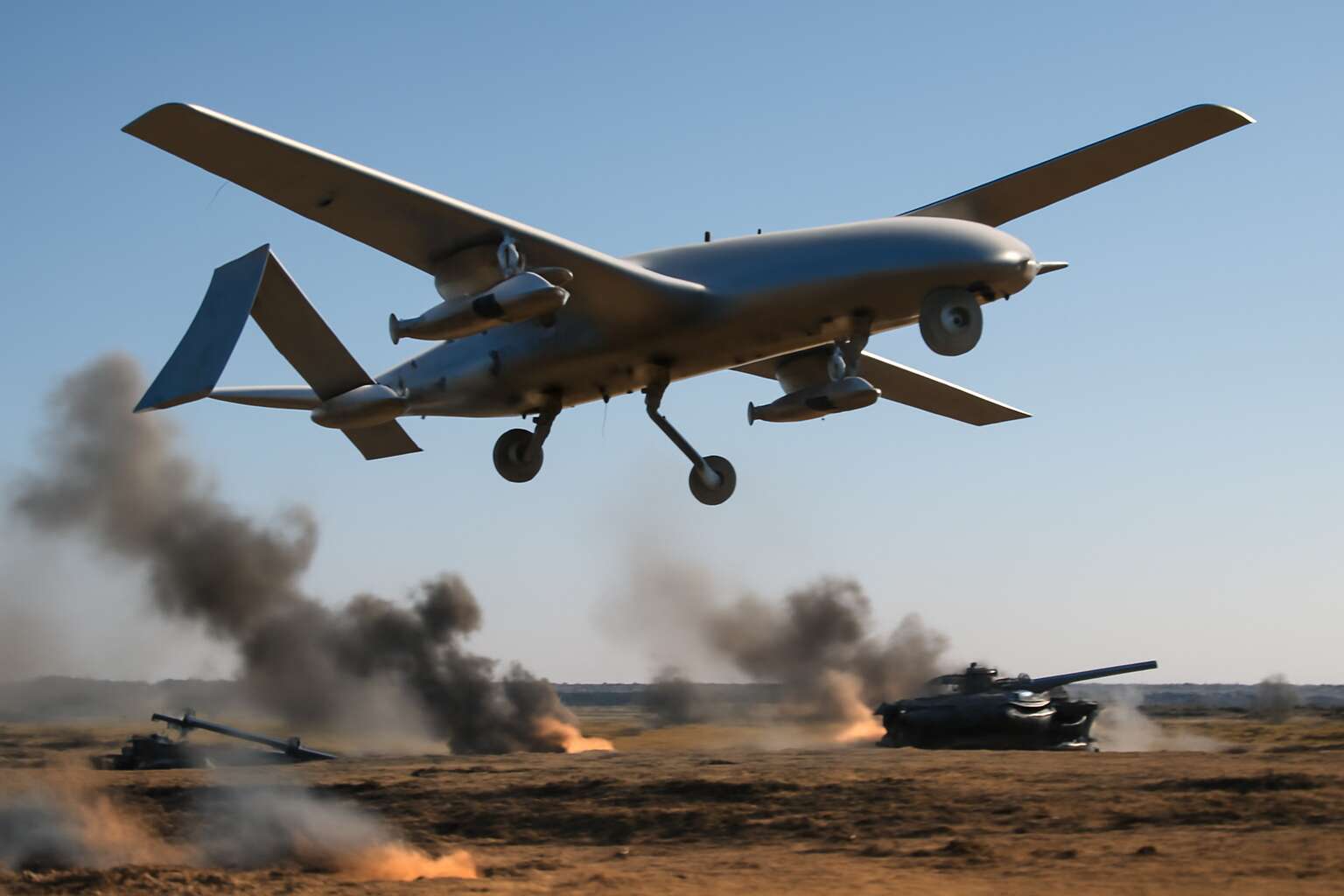
Overview of Military Drones
Introduction to Drone Technology in Defense
In the realm of modern warfare, drones in military operations have become the silent sentinels soaring above battlegrounds, transforming the very fabric of defense strategy. These marvels of drone technology in defense systems are no longer mere prototypes; they are vital tools that blend precision with ingenuity. As the skies fill with these autonomous guardians, their significance in South Africa’s military landscape continues to grow exponentially.
What makes drones in military so captivating is their ability to offer real-time intelligence, reconnaissance, and even targeted strikes without risking human lives. The evolution of drone technology in defense has accelerated at a breathtaking pace, driven by advancements in sensors, AI, and endurance capabilities. This blend of science and artistry ensures that modern militaries can monitor vast terrains with unmatched clarity and agility.
To grasp the full potential of drones in military, consider these essential facets:
- Extended flight durations enable prolonged surveillance missions.
- Stealth features allow discreet operations in sensitive zones.
- Integrated data systems enhance battlefield awareness.
Types of Military Drones
Within the shadowed corridors of modern warfare, the landscape of combat is reshaped by an array of formidable allies—military drones. These silent specters, cloaked in technological mastery, serve as the eyes and, sometimes, the fists of the modern soldier. Their roles are as varied as the night is dark, seamlessly transitioning from vigilant reconnaissance to precision strikes. As the realm of drones in military continues to evolve, understanding the diverse types becomes crucial to grasping their strategic significance.
From the sleek, high-altitude surveillance drones that patrol the vast skies to the nimble, attack-focused variants, each type bears a unique purpose. For instance, reconnaissance drones excel in gathering intelligence, while combat drones carry out targeted eliminations with lethal precision. The distinction often lies in their design and endurance capabilities.
- Unmanned Aerial Vehicles (UAVs): These are the backbone of modern military operations, capable of prolonged endurance missions and high-altitude surveillance.
- Attack Drones: Equipped with weaponry, these are designed for direct engagement, striking with calculated efficiency.
- Miniature Drones: Compact and discreet, perfect for covert operations and close-quarters reconnaissance.
In South Africa’s military landscape, these drones in military are transforming how battles are fought—an invisible force weaving through the darkness, gathering intelligence or unleashing firepower when least expected. The spectrum of drone types underscores their role as both guardians and executioners in the shadowy theater of modern combat.
Historical Development and Evolution
The evolution of drones in military applications is a story of relentless innovation and strategic adaptation. From their humble beginnings as remote-controlled aircraft used for reconnaissance during the Cold War, drones in military have dramatically transformed the landscape of modern warfare. Early models were primitive, limited to short-range surveillance, but as technology advanced, they became more sophisticated. Today, unmanned aerial vehicles (UAVs) are equipped with cutting-edge sensors, artificial intelligence, and precision weaponry, making them indispensable assets on the battlefield.
Throughout history, the development of military drones has been driven by the need for safer, more efficient ways to gather intelligence and engage targets. Innovations such as high-altitude, long-endurance surveillance drones now allow armies to monitor enemy movements over vast territories—South Africa’s military landscape, for example, increasingly relies on drones to enhance border security and tactical awareness. As the technology continues to evolve, the strategic significance of drones in military operations only deepens, heralding a new era of warfare where speed, stealth, and precision reign supreme.
Global Adoption and Key Players
The global landscape of military technology is witnessing a revolution driven by the rapid adoption of drones in military operations. Countries across continents recognize the strategic advantage these unmanned systems provide—enhanced surveillance, precision strikes, and real-time intelligence gathering. In fact, over 90 countries now incorporate military drones into their defense arsenals, reflecting their critical role in modern warfare.
Among the key players in this high-stakes arena are the United States, Israel, China, and Russia, each pioneering innovative drone technologies to secure their national interests. These nations have developed sophisticated systems capable of operating in complex environments, making drones in military an indispensable component of their military strategies. With advancements in artificial intelligence and sensor technology, the scope of drone applications continues to expand, capturing the imagination of defense strategists worldwide.
Technologies Behind Military Drones
Advanced Aerodynamics and Design
At the heart of modern warfare, the technological marvels of drones in military operations are driven by advanced aerodynamics and innovative design principles. These unmanned aircraft are meticulously engineered to optimize flight efficiency, stealth, and endurance, often pushing the boundaries of what’s possible in aerial technology. The sleek contours and lightweight composites not only reduce drag but also enhance maneuverability in complex terrains, making them indispensable in contemporary combat scenarios.
One of the most fascinating aspects of drone design is the integration of stealth features—such as radar-absorbing coatings and low-profile shapes—that allow these machines to evade detection. This sophistication in aerodynamics stems from a deep understanding of fluid dynamics and materials science, which together create drones in military that can perform with remarkable precision and resilience. As technology advances, so too does the capability of these unmanned systems to adapt to ever-changing battlefield conditions.
Incorporating cutting-edge aerodynamics isn’t just about speed; it’s about achieving a delicate balance between flight stability, energy consumption, and operational range. For instance, some drones leverage variable-sweep wings or adaptive control surfaces to optimize their flight profile, depending on mission needs. Such innovations exemplify how advanced aerodynamics and design are shaping the future of drones in military, ensuring they remain at the forefront of aerial dominance. The pursuit of perfection in drone design underscores a relentless quest for superiority in modern warfare, reflecting a profound understanding of both physics and strategic necessity.
Autonomous Navigation and AI Integration
At the intersection of innovation and precision, the technologies behind drones in military operations weave a tapestry of intelligence and autonomy. Autonomous navigation, powered by sophisticated AI integration, transforms these unmanned systems from mere machines into vigilant sentinels patrolling the skies with a near-human acumen. By employing a symphony of sensors, machine learning algorithms, and real-time data processing, military drones can interpret complex terrains and adapt instantaneously to shifting battlefield dynamics.
What truly elevates these machines is their ability to execute missions with minimal human oversight, relying on an intricate web of AI-driven decision-making. This fusion of technology not only enhances operational efficiency but also minimizes risks to personnel. In fact, some of the most advanced drones in military harness autonomous navigation to perform reconnaissance, surveillance, and targeted strikes—often operating seamlessly in environments where human presence is perilous.
Within this realm of innovation, the integration of artificial intelligence breathes life into the drone’s capabilities, making them more than mere tools—they become strategic extensions of military command. As AI systems evolve, so too does the scope of what drones in military can achieve, opening new horizons in aerial warfare that are as poetic as they are formidable.
Sensor and Payload Technologies
Behind the sleek exterior of drones in military operations lies a marvel of technological sophistication—particularly in sensor and payload technologies. These vital components transform a simple flying platform into an unparalleled instrument of intelligence and precision. Advanced sensors, such as multispectral cameras and radar systems, enable military drones to penetrate darkness, fog, and even dense foliage, revealing hidden enemy positions with astonishing clarity.
The payloads carried by these unmanned marvels are equally impressive, tailored for diverse missions. From high-resolution imaging systems to electronic warfare modules, each payload elevates the drone’s operational scope. For instance, some drones are equipped with signals intelligence (SIGINT) devices, intercepting communications and disrupting enemy command chains with finesse.
To optimize their capabilities, military drones often incorporate a combination of sensor and payload technologies in an integrated platform. This synergy ensures real-time data collection and analysis, empowering military strategists with actionable intelligence. The seamless melding of these advanced tools makes drones in military not just tools, but pivotal agents of modern warfare—poised to redefine the boundaries of aerial combat and reconnaissance.
Battery Life and Power Sources
Powering the skies with relentless endurance, the battery life and power sources of drones in military operations are a testament to cutting-edge innovation. Unlike traditional aircraft, military drones demand a delicate balance between weight and energy capacity, compelling engineers to develop sophisticated energy solutions that keep these aerial sentinels aloft longer and with greater resilience.
Advancements in lithium-polymer and solid-state batteries have significantly extended operational hours, allowing drones to perform extended reconnaissance and surveillance missions without interruption. The integration of hybrid power systems, combining batteries with small-scale fuel cells, further amplifies endurance, ensuring uninterrupted intelligence gathering in the most demanding environments.
Here’s how power sources are optimized for military drones:
- High-capacity batteries for extended flight durations
- Fuel cells providing rapid recharging and longer endurance
- Innovative energy harvesting techniques like solar panels for specific drone models
These technological marvels not only enhance the operational scope but also redefine the potential of drones in military, transforming them into persistent, reliable agents of modern warfare, ready to adapt and endure in the face of evolving battlefield challenges!
Strategic and Tactical Uses of Military Drones
Intelligence, Surveillance, and Reconnaissance (ISR)
In the shadowed theater of modern conflict, drones in military operations serve as the silent sentinels—unblinking eyes that pierce the veils of darkness and deception. Their strategic deployment transforms the battlefield into a chessboard, where intelligence, surveillance, and reconnaissance (ISR) form the backbone of decisive action. These aerial observers gather crucial data with unerring precision, illuminating enemy movements and terrain intricacies that would otherwise remain cloaked in obscurity.
At the tactical level, drones excel in real-time battlefield awareness, offering commanders an almost clairvoyant perspective. They can hover over contested zones, monitoring the ebb and flow of hostilities, and relay critical information that shapes immediate decisions. Meanwhile, on the strategic front, the intelligence collected feeds into broader military planning, enabling preemptive strikes and long-term security measures. The fusion of ISR capabilities with cutting-edge sensor payloads ensures that drones in military are not merely tools but extensions of the human eye—intelligent, adaptable, relentless.
- Real-time target tracking
- Intelligence gathering for strategic planning
- Monitoring enemy movements over vast terrains
Target Acquisition and Precision Strikes
Strategic and tactical uses of drones in military operations are nothing short of revolutionary. These unmanned marvels excel in target acquisition, transforming how armies identify and engage threats. Precision strikes, enabled by sophisticated sensor payloads, allow for surgical interventions that minimize collateral damage—a crucial advantage in today’s complex combat environments. With real-time data transmission, commanders can swiftly adapt their strategies, turning the battlefield into a dynamic chess game where every move is informed and deliberate.
On the strategic front, drones in military serve as vital tools for monitoring enemy movements over vast terrains, offering a comprehensive picture that enhances long-term planning. They also facilitate intelligence gathering for strategic decision-making, ensuring military assets are deployed with surgical accuracy. Meanwhile, their role in tactical operations—such as target tracking—remains indispensable. In fact, the ability to pinpoint targets with incredible precision has made drones an essential component of modern warfare, especially when executing targeted strikes against high-value targets. As technology advances, so does the sophistication of these aerial assets, solidifying their place as the eyes and hands of contemporary military forces.
Close Air Support (CAS)
In the theater of modern combat, the role of drones in military operations has evolved into an indomitable force—an unseen sentinel soaring above chaos, guiding decisions with unwavering precision. Among their many talents, Close Air Support (CAS) exemplifies the symphony of technological mastery, where unmanned aircraft become the vigilant guardian of ground troops. These drones in military serve as the first line of defense, offering real-time surveillance that transforms the fog of war into clarity.
Through rapid deployment and swift response, drones in military provide tactical advantage by engaging targets with surgical accuracy. Their ability to hover, track, and strike dynamically makes them invaluable in complex conflict zones. This seamless integration of aerial intelligence and firepower empowers commanders to orchestrate precision strikes, minimizing collateral damage while maximizing strategic impact. Whether delivering pinpoint munitions or relaying vital battlefield intel, drones redefine what it means to be a modern warrior’s ally.
As technological innovation propels their capabilities forward, the deployment of drones in military continues to revolutionize Close Air Support, making these unmanned assets not just tools but vital extensions of military strategy itself. Their presence on the battlefield is a testament to the relentless pursuit of dominance in a landscape where every second counts and every move is calculated with poetic precision.
Search and Rescue Operations
When it comes to strategic and tactical uses of drones in military operations, the battlefield has never been the same. These aerial marvels are not just flying cameras—they’re the unseen heroes of search and rescue operations, especially in rugged terrains like South Africa’s wild landscapes or dense urban jungles. Drones in military excel at locating stranded soldiers or civilians with pinpoint accuracy, often faster than a traditional rescue team can blink.
Imagine a scenario where a soldier is injured behind enemy lines or caught in a collapsed building. Here, drones in military shine as the first responders—scanning vast areas at high speed, relaying vital information back to command. Their ability to access hard-to-reach zones turns what was once a perilous mission into a calculated operation. In fact, some armies deploy specialized drones equipped with thermal imaging and loudspeakers, transforming them into airborne paramedics that can deliver supplies or communicate with trapped individuals.
In the grand chessboard of modern warfare, drones serve as tactical assets, offering real-time intelligence and rapid response capabilities. They can be part of a
- coordinated strike force
- lifesaving rescue mission
—all while minimizing risks to human life. As technology advances, the use of drones in military search and rescue operations is poised to become even more sophisticated, turning these unmanned aircraft into indispensable guardians of the battlefield and beyond.
Border Patrol and Maritime Surveillance
When it comes to border patrol and maritime surveillance, drones in military have become the silent sentinels of national security. These unmanned aircraft are deployed along vast borders like South Africa’s sprawling frontiers, where they tirelessly monitor for illegal crossings, smuggling, or any suspicious activity. Their ability to cover enormous areas swiftly and stealthily makes them indispensable in today’s strategic landscape.
Maritime surveillance is another arena where drones in military truly shine. Equipped with advanced sensors and cameras, they patrol coastlines and open waters, detecting unauthorized vessels or potential threats long before they approach the shoreline. This proactive approach turns the tide—literally—by providing real-time intelligence that can save lives and prevent criminal enterprises from slipping through the cracks.
In practice, military units often utilize a combination of high-altitude surveillance drones and lower-flying tactical models. These can be deployed in a
- coordinated manner to maximize coverage
- detect intrusions
- enhance situational awareness
—all while minimizing risk to personnel. As technology advances, the integration of AI-powered analytics ensures that these drones in military not only observe but also interpret data, turning raw visuals into actionable insights faster than ever before. For South Africa and beyond, the strategic deployment of border and maritime drones is no longer optional—it’s essential to safeguarding sovereignty in an increasingly complex world.
Advantages of Drones in Military Operations
Enhanced Situational Awareness
Enhanced situational awareness is a game-changer in modern military operations. Drones in military provide real-time intelligence, allowing commanders to make faster, more informed decisions. These unmanned aerial vehicles can survey vast areas quickly, capturing high-resolution imagery and transmitting critical data without risking personnel. This capability significantly improves battlefield awareness and reduces blind spots.
Furthermore, the integration of advanced sensor payloads with drones in military ensures comprehensive coverage of complex terrains. They can detect movement, identify targets, and monitor enemy activity with precision. For instance, persistent surveillance over conflict zones becomes feasible, keeping troops and assets safer. The strategic advantage is clear: drones enable forces to anticipate threats before they materialize, giving a decisive edge on the battlefield.
Reduced Risk to Human Life
In the high-stakes arena of modern warfare, the foremost priority is safeguarding human lives. Drones in military operations exemplify this principle, dramatically reducing the need to send soldiers into perilous situations. By deploying unmanned aerial vehicles for reconnaissance, surveillance, and even targeted strikes, armed forces can gather crucial intelligence without exposing personnel to danger. This technological leap not only preserves lives but also enhances operational precision.
Moreover, drones in military provide a strategic advantage by operating in environments that are too risky for humans. Their ability to stay airborne for extended periods means continuous monitoring of hostile zones without fatigue or hesitation. This persistent presence acts as a shield, deterring enemy movements and providing real-time updates for commanders on the ground.
- Minimize casualties in combat zones
- Conduct hazardous missions safely
- Increase mission success rates through precise data collection
With unmanned systems becoming an integral part of South Africa’s defense landscape, the emphasis on reducing human risk continues to grow. Drones in military are not just tools of surveillance—they are guardians of life, transforming warfare into a more calculated, less deadly pursuit.
Cost-Effectiveness and Operational Efficiency
Cost-effectiveness and operational efficiency are revolutionizing military strategies worldwide, and drones in military are at the forefront of this transformation. Unlike traditional aircraft, drones require fewer personnel and significantly lower maintenance costs, making them an economical choice for sustained operations. Their ability to be deployed quickly and repeatedly without the delays associated with crewed missions streamlines mission planning and execution.
Furthermore, the versatility of drones in military applications means they can be tailored to specific operational needs, whether surveillance, reconnaissance, or targeted strikes. This adaptability reduces resource expenditure and enhances mission success rates. To maximize their potential, armed forces often leverage a combination of drone types, such as:
- Fixed-wing reconnaissance drones for long-range patrols
- Quadcopters for close-quarters surveillance
- Specialized payload drones for precise targeting
The integration of these diverse systems results in a seamless operational flow, elevating the overall effectiveness of military campaigns. As the landscape of modern warfare becomes increasingly complex, the strategic deployment of drones in military ensures that operational efficiency is achieved without compromising safety or precision—truly a game-changer in contemporary defense technology.
Persistent Surveillance Capabilities
One of the most compelling advantages of drones in military operations is their persistent surveillance capabilities. Unlike traditional reconnaissance methods, drones can remain airborne for hours, continuously monitoring areas of interest with unwavering precision. This persistent coverage provides military commanders with a real-time, comprehensive picture of evolving threats, enabling swift and informed decision-making.
Staying ahead in modern warfare requires constant vigilance, and drones excel at that. Their ability to gather intelligence over extended periods without fatigue or risk to human life makes them invaluable assets. Whether tracking insurgent movements or overseeing border security, drones in military serve as vigilant eyes that never blink, transforming the landscape of strategic oversight.
In deploying drones for surveillance, armed forces often utilize specialized systems such as:
- High-resolution cameras for detailed imagery
- Infrared sensors for night-time operations
- Real-time data transmission for immediate analysis
This combination of features ensures that military units can maintain a persistent presence, adapting quickly to threats while minimizing operational costs. The ability to sustain long-term surveillance without risking personnel underscores just how revolutionary drones in military truly are for safeguarding national interests with efficiency and precision.
Challenges and Limitations
Counter-Drone Technologies and Defenses
As the deployment of drones in military operations accelerates, so do the challenges faced by counter-drone technologies. adversaries are becoming increasingly sophisticated, employing tactics that make detection and neutralization a complex endeavor. One persistent limitation is the ability to distinguish between hostile drones and benign aerial objects, often leading to false positives that complicate swift responses. Additionally, the rapid evolution of drone technology continuously outpaces existing defense systems, creating a perpetual cat-and-mouse game.
Counter-drone defenses must grapple with a range of technical and operational hurdles. For instance, high-energy jamming can sometimes interfere with civilian communication networks, raising concerns about collateral disruption. Moreover, small, agile drones can evade traditional radar systems, demanding the development of layered, multi-sensor detection methods. The following list highlights some of the most pressing challenges faced by those aiming to control the threat posed by drones in military contexts:
- Limited detection range for miniature, low-altitude drones
- Difficulty in intercepting fast-moving or autonomous drone swarms
- Legal and ethical concerns surrounding countermeasure deployment
- High costs of advanced drone interception systems
Ultimately, the ongoing race to develop effective drones in military, along with counter-drone technologies, underscores a new era of aerial warfare—one where innovation must outpace the relentless march of technological ingenuity.
Legal and Ethical Concerns
As the sky teems with the silent hum of drones in military operations, a shadowy realm of legal and ethical concerns emerges—an intricate web that challenges the very fabric of modern warfare. The deployment of these airborne sentinels raises profound questions about sovereignty, privacy, and the limits of technological reach. Governments and military strategists grapple with establishing boundaries that safeguard human rights without compromising security.
Moreover, the rapid evolution of drone technology often outpaces the legal frameworks designed to regulate their use, creating a perilous gap. For instance, the legality of autonomous drone swarms operating without direct human oversight remains a contentious debate. This ambiguity fuels fears of unintended escalation and collateral damage—an issue that demands vigilant oversight and international collaboration.
- Legal restrictions on surveillance and targeted strikes
- Ethical dilemmas surrounding autonomous decision-making
- Potential misuse of drones in asymmetric warfare scenarios
These elements highlight the complex dance between innovation and regulation—an ongoing challenge in the realm of drones in military. As nations race to harness the full potential of this technology, they must also navigate the murky waters of morality and legality, ensuring that progress does not come at the expense of fundamental human values.
Vulnerabilities to Hacking and Electronic Warfare
While drones in military operations have revolutionized modern warfare, they are not invincible. Vulnerabilities to hacking and electronic warfare threaten their integrity, turning these airborne assets into potential liabilities. Cyber adversaries are continually developing sophisticated methods to intercept signals, jam communications, or take control of drone systems—exposing critical gaps in security.
For instance, electronic countermeasures can disrupt navigation or payload delivery, rendering drones ineffective at crucial moments. The risk of malicious interference underscores the importance of robust cybersecurity measures. As technology advances, so do the tactics employed by foes to exploit weaknesses in drone networks.
In some cases, adversaries deploy swarms of decoy drones or use jamming devices to overwhelm detection systems. These tactics reveal a stark truth: vulnerabilities to hacking and electronic warfare are among the most pressing challenges facing drones in military. As nations race to harness their full potential, the shadow of cyber threats demands vigilant defense strategies and continuous technological evolution.
Operational Constraints and Weather Dependency
Operational constraints pose a significant challenge to the efficacy of drones in military. Despite their technological sophistication, drones often struggle to operate seamlessly across diverse terrains and unpredictable environments. Their reliance on stable GPS signals and uninterrupted communication links makes them vulnerable in hostile or remote regions, where electronic interference and signal jamming are common tactics. This vulnerability can compromise mission success and elevate risks for human personnel.
Weather conditions further exacerbate these limitations. Strong winds, rain, fog, and extreme temperatures can impair drone flight stability and sensor accuracy. For instance, heavy rain can hinder visual reconnaissance, while turbulent air currents threaten precise targeting. Such weather dependency underscores the need for adaptive systems that can withstand nature’s unpredictability—yet, even the most advanced drones in military are not immune to these natural forces.
In fact, the reliance on sophisticated sensor payloads and autonomous navigation systems becomes a double-edged sword. When conditions deteriorate, these systems may falter, forcing operators to revert to manual control or abort missions altogether. This delicate dance between technological capability and environmental constraint remains one of the most pressing challenges for drone deployment in military operations. It’s a stark reminder that—no matter how advanced—drones are still bound by the immutable laws of nature and operational limits.
Future Trends and Innovations
Swarm Technology and Coordinated Drone Operations
As technology takes flight, the horizon of drones in military operations is expanding into a realm once thought reserved for science fiction. Future trends beckon us toward swarm technology—where fleets of miniature drones operate in concert, mimicking the collective intelligence of a swarm of insects. This innovation promises to revolutionize battlefield tactics with unparalleled coordination, resilience, and adaptability. Imagine a thousand tiny sentinels working together, each autonomously responding to threats and obstacles, creating a tapestry of surveillance and attack that is both fluid and formidable.
Moreover, the evolution of coordinated drone operations will see these devices functioning as a seamless unit, driven by advanced AI and machine learning algorithms. This synergy allows for real-time data sharing, dynamic decision-making, and precision strikes—transforming how military forces approach complex missions. The future of drones in military is not merely about individual machines but about orchestrated symphonies of technology, where each drone contributes to a collective purpose with elegance and precision.
Advanced AI and Machine Learning Capabilities
The horizon of drones in military operations is rapidly transforming, driven by the relentless march of artificial intelligence and machine learning capabilities. These advanced technologies are no longer confined to the realm of science fiction; instead, they are becoming integral to modern battlefield strategy. AI-powered drones can analyze vast datasets in real time, enabling swift, autonomous decision-making that outpaces human reaction times. Such capabilities elevate the role of drones in military to new heights—where precision, resilience, and adaptability become core attributes of these technological marvels.
Future trends in drone technology emphasize not just individual units but sophisticated swarms operating as cohesive entities. Leveraging machine learning, these swarms can dynamically adapt to changing battlefield conditions, responding to threats with an almost instinctive fluidity. Incorporating real-time data sharing and advanced AI algorithms ensures these systems function seamlessly, orchestrating complex missions with minimal human oversight. This evolution signifies a paradigm shift, turning drones in military into a symphony of synchronized operations that redefine tactical efficiency and strategic dominance.
In this landscape, the integration of high-level AI capabilities offers several profound advantages:
- Enhanced autonomous navigation that minimizes human error
- Real-time threat assessment and adaptive response mechanisms
- Optimized coordination among multiple drones for multifaceted missions
As these technological innovations continue to mature, the battlefield will witness a new era—where intelligence, speed, and precision merge into a formidable force. The future of drones in military is poised to be one of relentless evolution, driven by AI’s capacity to mimic, and perhaps surpass, human cognition in the chaos of combat. These advancements promise not just tactical superiority but a redefinition of what it means to operate effectively in complex, unpredictable environments—truly a testament to how far drones in military have come and how far they will go.
Integration with Cyber Warfare Strategies
The future of drones in military strategy is not just about advancing hardware but also integrating cutting-edge cyber warfare tactics that redefine the battlefield. As adversaries become more sophisticated in digital domains, the importance of securing drone networks against cyber threats becomes paramount. Innovations in encryption, intrusion detection, and real-time countermeasures are now essential components of modern drone operations.
Emerging trends point toward seamless integration of drones in military cyber operations, where they serve as both offensive and defensive tools. These drones can disrupt enemy communication channels or gather critical intelligence on cyber vulnerabilities—turning the skies into a high-stakes digital battlefield. The synergy between drone technology and cyber warfare strategies ensures that military forces can maintain dominance in both physical and virtual arenas.
In this evolving landscape, an ordered approach to future developments involves:
- Embedding robust cybersecurity protocols within drone systems
- Developing autonomous cyber attack capabilities that can neutralize threats on command
- Creating resilient networks that safeguard drone operations from hacking attempts
By weaving these innovations into the fabric of drones in military, armed forces gain an unparalleled edge—where precision, speed, and digital resilience converge. As cyber warfare becomes increasingly intertwined with drone technology, the battlefield is poised for a transformation that challenges traditional notions of combat and strategic dominance. The horizon is clear: drones will soon be indispensable in shaping not only physical but also cyber-centric warfare landscapes.
Miniaturization and Stealth Features
As drones in military continue to evolve, two trends stand out for their potential to revolutionize battlefield tactics: miniaturization and stealth features. Imagine a tiny drone that can slip past enemy radar undetected—welcome to the future! Miniaturized drones are not just about size; they pack a punch with advanced sensors and payload capacity that rival their larger counterparts.
Stealth technology, once the domain of high-tech aircraft, is now making its way into drone design. These stealth drones boast reduced radar cross-sections and noise signature, making them ghost-like in the sky. This combination of small size and stealth capabilities allows military operators to conduct covert missions with unprecedented finesse.
Emerging innovations include:
- Ultra-lightweight materials that resist electronic detection
- Adaptive camouflage systems that blend into the environment
- Integrated low-observable propulsion systems
These advancements mean drones in military are no longer just flying cameras but stealthy, miniature warriors capable of infiltrating enemy lines with ease. As these technologies mature, expect even more compact, cunning drones to become staples in modern defense arsenals—turning the skies into a stealthy playground for military strategists.
Global Impact and Geopolitical Implications
Military Dominance and Power Balance
The proliferation of drones in military operations has woven a tapestry of influence that stretches far beyond the battlefield, reshaping global power dynamics with breathtaking velocity. As nations race to harness the technological marvels of drones in military, the geopolitical chessboard becomes a stage for shifting alliances and emerging superpowers. Countries investing heavily in drone technology often find themselves at the forefront of military dominance, wielding an invisible yet formidable arsenal that can sway conflicts and diplomatic negotiations alike.
In this high-stakes arena, power balance is delicate and constantly evolving. The capabilities of drones in military—ranging from persistent surveillance to precision strikes—have become critical in asserting strategic superiority. As a result, regional and global stability hinges increasingly on who masters these aerial sentinels. This technological arms race not only amplifies the might of individual nations but also introduces new complexities to international diplomacy, with some experts warning of a potential destabilization if drone proliferation continues unchecked.
Ethical Debate and International Law
As drones in military continue to carve their shadowy imprint across the geopolitical landscape, their global impact becomes an intricate dance of power and vulnerability. These silent sentinels, often unseen but profoundly felt, have transformed the way nations project influence from distant borders to the heart of contested regions. The rapid proliferation of military drones has not only redefined warfare but also ignited a fierce debate on the ethical implications of autonomous killing machines and surveillance dominance.
In the realm of international diplomacy, the emergence of drone technology challenges established norms and introduces a new layer of complexity. Countries wielding advanced drones in military operations often find themselves at a strategic advantage, yet this technological arms race raises concerns about escalating conflicts and destabilizing fragile peace agreements. The delicate balance of power might tip dangerously if unchecked proliferation of drones in military applications continues, prompting urgent discussions on international law and ethical standards.
Key issues include:
- The potential for drones in military to blur lines between combatant and civilian targets, raising profound ethical questions.
- The need for comprehensive international regulations to govern drone usage, ensuring accountability and minimizing unintended consequences.
- The risk of technological escalation, where drone proliferation could ignite regional arms races or provoke asymmetrical warfare.
Such considerations underscore that while drones in military herald unprecedented operational capabilities, they also demand a vigilant, globally coordinated response to safeguard ethical integrity and international stability. The future of drone warfare hinges on the delicate interplay between innovation and responsibility—an ongoing saga that shapes the very fabric of modern geopolitics.
Proliferation Risks and Regulations
The rapid expansion of drones in military applications has cast a long shadow over global geopolitics, raising serious questions about proliferation risks. These unmanned marvels are no longer confined to the battlefield; they influence international power dynamics in ways that are both fascinating and perilous. With more countries acquiring advanced drones in military, the potential for regional arms races and destabilization increases exponentially. The proliferation risks are real — a single drone sale can shift the balance of power, turning small conflicts into full-blown crises.
To mitigate these dangers, international regulations are vital. Countries must agree on standards that govern drone usage, ensuring accountability and avoiding unintended escalation. Without a robust legal framework, the temptation for technological escalation remains high, risking an unchecked spiral of drone proliferation. An organized, global response could help curb the spread of military drones, maintaining a fragile peace amid the rapid evolution of drone technology in military contexts.
- Establishing clear international treaties on drone proliferation
- Implementing strict export controls to prevent unauthorized sales
- Developing surveillance systems that track drone movements across borders
As drones in military continue to evolve, the stakes are higher than ever. Strategic stability hinges on responsible regulation and international cooperation—without which, the very fabric of peace might fray under the weight of unchecked drone proliferation.
Case Studies of Drone Warfare in Recent Conflicts
The global impact of drones in military operations is profound, reshaping how nations project power and influence. In recent conflicts, unmanned systems have demonstrated their strategic value, often tipping the scales in favor of technologically advanced militaries. For example, the use of drones in Syria and Ukraine has underscored their role in intelligence, surveillance, and targeted strikes, fundamentally altering conventional warfare dynamics.
Cases such as these reveal the geopolitical implications of drone proliferation. Countries like Iran and Turkey have expanded their drone arsenals, challenging traditional military dominance and prompting regional arms races. The proliferation of drones in military contexts raises urgent questions about stability—what once seemed like a futuristic concept is now a reality with tangible consequences. As drone technology becomes more accessible, the potential for destabilization grows, emphasizing the need for vigilant international oversight.

0 Comments