Understanding Racing Drone Categories
FPV vs Line of Sight Flying
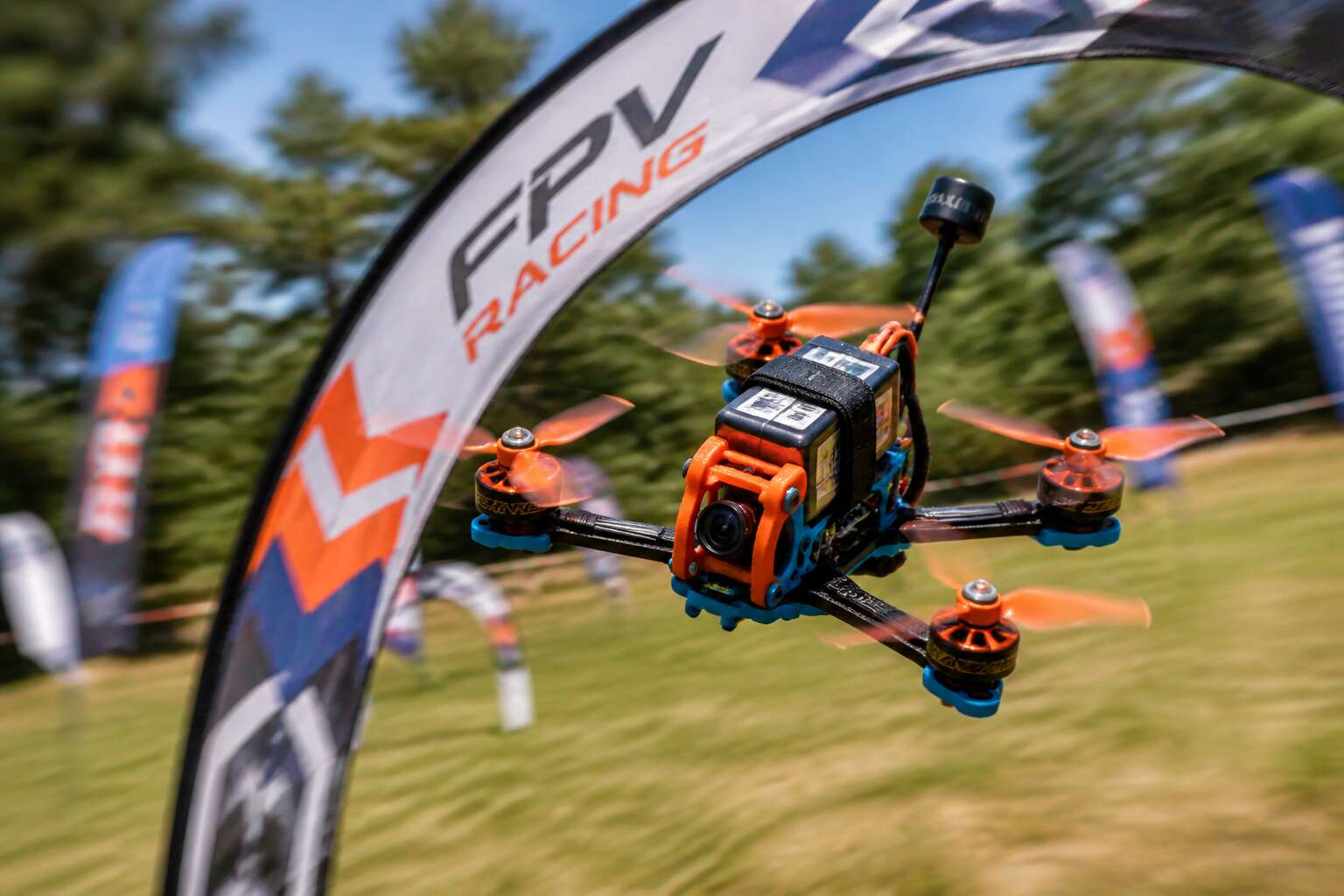
Racing drones have evolved into two distinct disciplines, each demanding a different kind of pilot. Flying First Person View, or FPV, places you inside the cockpit, seeing through the onboard camera. This visceral perspective is the dominant choice for competitive racing. The other method, Line of Sight, or LoS, requires keeping your eyes on the physical aircraft at all times.
The difference is not merely visual; it alters how you perceive speed and space. With FPV, your brain processes depth and direction from a low latency feed, enabling tight cornering and precise gap shots. LoS pilots must translate a distant machine’s orientation into action, a skill that feels like spatial chess. For those exploring drone racing drones, the choice dictates your training path.
1. FPV allows for complex three dimensional combat.
2. LoS relies on pure reaction and reading the airframe’s attitude.
3. FPV requires video goggles and a camera system.
4. LoS flying is simpler in hardware but harder in execution.
Most pilots begin with LoS to master basic controls, but the lure of the immersive view is strong. It is a decision that shapes every other choice, from the gear you buy to the races you enter.
Classes and Size Regulations
Every fleet of drone racing drones is born from rules written in grams and millimetres. Classification is the sport’s anatomy. It separates machines by weight, propellor diameter, and battery voltage. These numbers decide race entry and whether a machine is legal to fly.
The main divisions are simple:
- Tiny Whoop class: under 100 grams, ducted propellors, for indoor courses.
- 3 inch class: around 250 grams, agile, for backyard gates.
- 5 inch class: the professional standard, up to 800 grams on race day.
- Micro class: governed by stricter power limits.
In South Africa, size regulations carry a sharp edge. The Civil Aviation Authority links weight to permissions. A sub-250 gram racer avoids most licensing burdens. Above that threshold, you enter a world of registration and restricted zones. The drone racing drones that thrive here balance power with compliance.
Core Components Overview
The speed of a racing machine is only half its story. The true character of drone racing drones emerges from how their parts interact under stress. Each component serves a specific role, and when one fails, the entire machine suffers. For pilots in South Africa, understanding this ecosystem is essential for building machines that survive both races and the country’s varied climate.
The frame forms the skeletal core. Most racers choose lightweight carbon fibre, valued for its rigidity and ability to dampen vibration. The electronics stack sits in the centre, housing the flight controller and speed controllers. This is the nervous system. The power train includes motors and propellors, which convert battery energy into thrust. A reliable video system then transmits the pilot’s view to the goggles.
– Flight Controller: The brain, processing pilot inputs and gyroscopic data.
– Electronic Speed Controllers: Manage power delivery to each motor.
– Motors: Provide the rotational force for thrust.
– Video Transmitter: Sends the live feed to the pilot’s screen.
These core elements define the balance of power and agility. A pilot who masters the assembly and tuning of these parts holds a significant advantage, as raw speed without control is useless. This technical knowledge is the foundation for success with drone racing drones in any South African race circuit.
Camera and Video Transmission Systems
A blurry feed is a crashed drone. In South Africa, where the sun creates harsh glare and open landscapes scatter video signals, the camera and transmission system determine what you actually see.
Camera specifications matter more than pixel count. Racing cameras prioritise low latency over cinematic quality. A standard 4:3 sensor, paired with a wide field of view, gives pilots the peripheral awareness needed for close racing. Crucially, the camera must handle dynamic lighting without washing out the image, which is a common issue at outdoor circuits under highveld sun.
Transmission adds another layer. Pilots fly on 5.8GHz frequencies, and selecting a clear channel is a tactical choice. Congested race days require sharp signal filtering to prevent channel bleed.
1. Camera: Choose a model with a high dynamic range.
2. Antenna: Use a directional patch for long straights.
3. Power: A 600mW output balances range with battery drain.
The video system is your only view into the race. For drone racing drones, clear visuals translate to faster lap times and fewer repairs.
Building Your Own Race Quad
Setting a Realistic Budget
The path to owning a custom quad begins with a ledger, not a soldering iron. Setting a realistic budget for drone racing drones forces you to confront the difference between what you want and what you actually need. From my own experience, a mid-grade build costs less than you fear but demands more honesty than you expect. A frame, motors, ESCs, and a flight controller swallow about 70 percent of your funds, while the rest flows toward consumables that vanish on impact.
Spare parts are not optional. They are the quiet currency of this sport. After my second outing, I replaced a motor bell and two propellers before sunset.
– Spare arms and baseplates
– Extra motors and ESCs
– A reliable soldering station with fine tips
That soldering station becomes your constant companion. A realistic budget also accounts for ground equipment like goggles and radios, even if you already own them from earlier sessions. The real trap appears when impulse purchases inflate the total. Track every rand in a spreadsheet, let necessity guide each purchase, and your wallet will survive the next tangled branch incident.
Choosing the Right Frame Material and Design
Carbon fibre frames dominate drone racing drones for good reason. They flex on impact and recover without bending. A 5mm main plate survives Highveld rocks better than a 4mm, though it adds grams. The geometry matters more than the colour. True X layouts place motors square, which suits tight South African tracks. Stretch X frames move front arms forward for straight-line speed, at the cost of yaw agility.
- True X: balanced turning
- Stretch X: faster straights
Stack mounting patterns force a choice. A 30.5mm pattern gives easier wiring, while 20 by 20 keeps the airframe slim. My own drone racing drones use the quieter 30.5mm standard, simply because my fingers are clumsy.
Matching Motors, ESCs, and Propellers
Matching motors, ESCs, and propellers determines whether a build performs or fails. The stator size controls torque while the KV rating dictates prop spin speed. For a 5-inch race quad, 2207 motors with 1750KV to 1950KV ratings pair well with 5×4.3 props, but your ESC must handle the motor’s peak current draw.
I have burned through two ESCs by ignoring this. The fix was simple:
- Overspec the ESC by 10 amps beyond the motor’s rated continuous draw
- Match prop pitch to your flying style, more than the motor’s KV
- Check component temperature after the first flight; heat signals failure
Prop selection directly alters how drone racing drones respond at speed.
Flight Controller Selection and Firmware
The flight controller is the component racers overlook until it fails. It processes all gyro inputs, and its firmware decides how your quad responds. A 32-bit F4 or F7 processor handles gyro data at rates above 8kHz, which matters when drone racing drones demand instant corrections. Many pilots choose an F7 for its spare UARTs and smoother filtering.
Selecting firmware like Betaflight or Kiss requires matching it to your controller’s target. For drone racing drones, a stable loop time is more critical than extra features. Priorities include a clean gyro mount, accessible USB port, and solid soldering pads. For a beginner build, avoid exotic features. Stick to a known FC design.
- Check that the firmware supports your specific board layout
- Test the gyro orientation before mounting
I prefer Betaflight for its community support and constant updates. The setup time directly influences how your quad responds to stick inputs.
Assembly Tools and Soldering Techniques
Building your own race quad demands a methodical approach to assembly. The right tools make the difference between a frustrating evening and a satisfying build. A quality soldering iron with a fine tip is non-negotiable, especially when working with dense ESC pads on modern drone racing drones.
- 63/37 lead solder for its forgiving melting point
- Heat shrink tubing in multiple diameters
- A precise wire stripper
- Anti-static tweezers for component handling
Clean joints matter more than speed. Tin the pads first, then apply the wire with steady pressure. I have seen many builds fail from cold solder joints that look fine but break contact under vibration. Use a smoke stopper on your first power-up to catch shorts before they fry components.
Initial Setup and Configuration
With over 1,200 registered drone racing drones in South Africa alone, the real race often starts before throttle-up. Initial setup and configuration is where passion meets pragmatism. Once your soldering is solid and connections are verified, you face the flight controller’s software suite. This digital handshake defines every flight characteristic.
Betaflight or similar firmware requires methodical attention. The gyro and accelerometer need calibration on a perfectly level surface. Then you set your receiver protocol, whether that is SBUS or Crossfire, ensuring your radio link speaks the same language as the controller. This is precise, silent work.
Your configuration sequence simplifies into three fundamental steps:
1. Confirm your motor mapping and ESC protocol, like DShot600.
2. Set your channel mapping for the receiver to match your transmitter.
3. Adjust the PID loop frequency to match your chosen drone racing drones hardware.
Skipping the filter setup is a common mistake. Vibrations from prop wash and frame resonance will confuse the flight controller. Properly tuned low-pass and notch filters reduce noise, keeping the quad stable during aggressive throttle changes. Take your time here. A solid configuration feels like a locked-in machine, ready for the chaotic speed of drone racing drones.
Pilot Skills and Training Strategies
The Importance of Simulator Practice
Simulator practice is the foundation of modern pilot training. Racing quad pilots log hundreds of virtual hours before their first real-world gate. Physics engines in programs like Velocidrone and Liftoff replicate throttle response and momentum with impressive accuracy.
Crashes in simulation cost virtual parts, not real ones. That distinction matters when a single prop strike can empty a modest budget. For South African pilots far from racing hubs, simulators build muscle memory without the travel.
Core skills from simulation:
– Split-second obstacle avoidance
– Throttle control in tight turns
– Recovery from unexpected stalls
Drone racing drones demand this precise control. Every simulator session sharpens reaction timing without draining batteries or wearing out components.
Mastering Throttle and Pitch Control
Mastering throttle and pitch control separates podium finishers from the pack. A racing pilot’s fingers translate visual cues into micro adjustments within milliseconds. The throttle stick governs altitude and speed, while pitch dictates the forward tilt that accelerates the quad. On South African tracks with sharp elevation changes, these inputs become lifelines.
- Set a single gate at varying heights
- Approach with full throttle, cut abruptly before the apex
- Hold pitch at 45 degrees
- Repeat until the quad’s nose never dips below horizon
This builds proprioception. Another method uses a loose tether to limit range. Practise hovering with throttle only, then add pitch increments. This isolates variables. Drone racing drones reward pilots who master these subtle corrections.
Navigating Gates and Tight Turns
Navigating gates and tight turns is where drone racing drones reveal their true character. In South Africa, the wind off the Highveld pushes quads sideways mid-corner. A pilot must read the gate’s orientation before committing. The approach matters more than the turn itself. Cutting wide gives you a cleaner angle, but it costs time. Cutting tight risks clipping a pylon.
Here is a drill I use with my own drone racing drones:
– Set four gates in a square, spaced ten metres apart.
– Fly the square at half throttle, then slowly increase speed.
– Turn only with the yaw stick until the nose aligns, then apply pitch.
Tight turns punish hesitation more than they punish speed. A smooth line through the apex beats a late correction every time. Trust your peripheral vision and let the quad settle before the next gate.
Learning Advanced Acrobatics
A flip is not a trick. It is a test of timing and nerve. On the Highveld, where the air thins and the thermals bite, learning advanced acrobatics on drone racing drones requires patience. The quad will not forgive a lazy thumb. I teach pilots to break each move into its raw geometry before adding throttle.
Start with a backflip at altitude. Hold the pitch stick, let the nose rotate past the horizon, then commit to the throttle. Most mistakes come from hesitating halfway. A power loop is the same but with a forward vector. You must see the exit before you enter.
- Altitude provides the only buffer when a move goes wrong.
- Practicing without goggles removes the fear response.
- Muscle memory arrives after the fiftieth repetition, not the fifth.
Drone racing drones demand this progression. Unlearning hesitation is the core skill. There is no shortcut through the rotation; only repetition and altitude buffer the mistake.
Maintenance, Repairs, and Upgrades
Crash-Proofing Your Build
On any race day, the average pilot replaces one prop and one arm before the final heat. That is the reality of drone racing. Crash damage is inevitable. The best pilots plan for it. A strict maintenance routine keeps your quad in the air longer than any expensive component.
Before each session, I check every solder joint, motor bell, and standoff. Loose screws cause more failures than hard impacts. I torque every fastener, reflow dull solder joints, and inspect the frame for micro-fractures. This ten minute ritual saves hours of repair work later!
Common crash-proofing upgrades:
- TPU-mounted VTX antennas absorb impact energy better than bare hardware.
- Capacitor banks smooth the voltage spikes that kill ESCs.
- Soft-mounted flight controllers resist vibration damage.
Each upgrade reduces the next repair. Unbreakable drones do not exist. The result is drone racing drones that are quicker to fix and slower to fail.
Identifying Common Component Failures
A burnt motor winding or a broken ESC pad is a quiet killer. I smoke tested five drone racing drones last season, and three failures started as faint discoloration on a solder joint. Vision fails before vibration. Trace every power wire back to its source during a pre-flight sweep. Look for melted heat shrink, bent capacitor legs, and cracked standoff bases. These are the first to surrender under load.
Common failure points I check after every hard landing:
– Motor screws backing out, which create vibration ghosts.
– Antenna coaxial cable shearing at the connector.
– FC rubber grommets compressing flat, turning the board into a tuning fork.
– Prop shaft splines stripping silently when the hub spins free.
The arm takes the visual damage, but the flight controller takes the blame. I replace suspect arms even when they look straight. A hairline fracture flexes mid-throttle and mocks your PID tuning. Reflowing a cracked solder joint takes three minutes. Replacing an ESC after a voltage spike takes half an hour. The costly path is skipping the inspection. Every repair session becomes a learning loop. You memorize the weak points of your drone racing drones and preempt the next failure before it grounds you.
Battery Care and Performance Optimization
One of the most understated talents in this sport is the ability to nurse a battery back to health after a punishing race day. While the mechanical components of your drone racing drones take the visible abuse, the battery is the silent workhorse that dictates the tempo of your entire session. Heat is the primary antagonist. Leaving a pack baking in the boot of your car under the Johannesburg sun is a slow poison that accelerates internal resistance. Treat the pre-flight charge cycle with the same reverence you give your soldering iron, and you will notice a more responsive throttle curve.
Performance optimization begins with disciplined storage habits. A fully charged pack left idle for a week becomes a swollen liability. Conversely, storing at a proper storage voltage, usually around 3.8 volts per cell, preserves the chemical integrity for the next outing.
– Inspect the silicone wire insulation for nicks from sharp frame edges.
– Check the balance lead connector for bent pins that cause false readings.
– Feel the pack for soft spots or puffing after a high-current draw.
– Cycle older packs on lower KV motors to extend their usable lifespan.
The upgrade path is rarely about buying new hardware. It is about recalibrating your expectations for existing gear. Replacing a worn XT60 connector with a gold-plated variant can reduce voltage sag during aggressive punch-outs. In the competitive South African circuit, where ambient temperatures fluctuate wildly, adapting your charge rate to the morning chill versus the afternoon heat yields a subtle edge. The pilots who win are often those who pay attention to the mundane details of their energy source, ensuring their drone racing drones finish the race with authority rather than limping across the line.
Upgrading Frames, Motors, and Antennas
The frame absorbs the punishment of every hard landing. After a rough session on the Highveld dust, I strip the carbon fibre down and inspect the weave for hairline fractures. A cracked arm flexes and transfers vibration to your flight controller. Replace it before a routine gate clip becomes a full rebuild.
Motors reveal their condition through sound. Listen for the grinding note of a bearing that has ingested grit. A spin test by hand reveals roughness that a filter can hide. For antennas, the overlooked upgrade remains the sma pigtail. A stiffer cable reduces whip and keeps the video signal locked in the turn.
When planning the next round of changes, consider these subtle modifications:
- Torque every motor screw to the same tension.
- Check the antenna mount for stress marks.
- Move to a shorter frame for lower inertia.
These refinements let your drone racing drones respond with precision.
Keeping Firmware Up to Date
A firmware update takes ten minutes. A bricked flight controller takes an evening to recover! In the world of drone racing drones, the difference is often a forgotten backup.
I keep a current Betaflight version archived on every device I own. When the racing season shifts, the tuning baseline shifts too. Older firmware handles new filter settings poorly.
Regular maintenance covers the log files for desync events. It verifies that gyro calibration has not drifted after a hard impact. Repairs and upgrades follow a physical checklist. Firmware introduces another failure mode. My pre-flight routine extends to the digital side:
- I confirm the checksum before flashing.
- I keep a known good configuration saved locally.
- I test the failsafe after every update.
South African load shedding adds a complication. A mid-flash power cut leaves the board unusable. A laptop on battery avoids that failure and keeps drone racing drones ready to race.
Cleaning and Seasonal Maintenance
A grain of Highveld sand can stop a motor bearing faster than any crash. Most pilots discover this mid-race, smoke drifting from a stator that ran fine an hour earlier. I strip the props after every dusty session and brush out the motors and ESC heat sinks. For drone racing drones, this routine determines whether you finish a heat or walk back to the pits.
Seasonal maintenance takes longer than a wipe down. Coastal humidity corrodes solder joints without warning. Inland winters bring static discharge risks. My checklist shifts with the calendar.
- Check motor bearings for grit after each race day
- Inspect the camera lens for micro scratches
- Reapply conformal coating before the rainy season
Repairs follow the same discipline. Replace a snapped arm, then inspect the frame for hairline cracks. Upgrades happen between seasons, not before a championship. Drone racing drones last when maintenance matches the environment.
Joining the Competitive Community
Finding Local Meetups and Clubs
On a dusty Saturday morning in Pretoria, I heard the hum of a dozen drone racing drones fill the air. That first meetup introduced a new vocabulary, where pilots speak in acronyms and every flight pack offers a new challenge.
Find clubs through local hobby shops or online forums. Many communities host open days where newcomers can observe without pressure. Bring your gear, but expect to share tools and stories.
- Arrive early to watch the safety briefing
- Ask veterans about their build choices
- Offer to help with gate setup
The bonds formed here often become training partnerships, pushing your skills beyond solo practice.
Leveraging Online Forums and Video Tutorials
Online forums and video tutorials form the second layer of the racing ecosystem for drone racing drones after that first dusty meetup. Rookies often assume skill arrives through hardware alone, but the fastest pilots I know spend more hours dissecting DVR footage than soldering. Go figure!
Join a forum thread and you will find debates about flight controller tuning, race gate spacing, and battery sag. Video tutorials break down specific moves, like how to recover from a prop stall without losing grip on the throttle.
- Search for local South African racing groups on Facebook or WhatsApp first; they often share unlisted tutorial links.
- Post your own crash footage and ask for critique. The community rewards honesty with precise advice.
Lurking is fine initially, but the competitive community responds to active participants. Upload a lap recording from your drone racing drones and compare times against posted benchmarks. You will notice patterns in your lines, then adjust your governor settings or camera angle accordingly.
Organizing Friendly Race Events
Your first race event should feel small. That is the point. Organizing a friendly race event builds the competitive community in South Africa from the ground up. Local pilots who volunteer to coordinate turn scattered practice into shared progress. Parks and abandoned industrial sites serve as informal venues.
I recommend inviting five pilots from your existing forum contacts and setting up six gates. Assign one person to timekeeping, another to battery charging. The goal is repetition, not spectacle.
- Confirm venue permission two weeks ahead
- Test gate spacing with your own drone racing drones
- Share the event flyer on WhatsApp groups
A structured event reveals gaps in your own preparation. Watching ten pilots fly the same course exposes line choices you never considered from your usual spot.
Attracting Sponsors and Building a Brand
Joining the competitive community in South Africa changes your view of drone racing drones. Once you attend a few events, you notice who the organisers trust. Sponsors notice that too. A pilot who helps with timing or gate setup shows reliability. Brands want supporters who build the sport, not only pilots who fly it.
Building a brand starts with small choices. Use the same colours on your drone and transmitter. Post consistent content of your practice sessions. Engage with local pilots online.
- Show up consistently to events
- Help with setup and breakdown
- Share event photos and results
- Represent your sponsor respectfully
When you approach a sponsor, bring proof of your involvement. Video footage and race results matter. So does your attitude at the track. Sponsors look for visibility. A pilot with a clean flying style and a professional social media presence stands out among the drone racing drones crowd. In South Africa, the community is small enough that reputation travels fast. Protect yours.
Building a Trackside Repair Toolkit
Joining a competitive flying circle demands a different level of preparation. Packing spare drone racing drones only helps if you brought the right tools. I learned this after watching a talented pilot scratch a final because nobody had spare propellers. That experience reshaped my view of trackside repairs.
Building a trackside repair kit starts with the failures you face most often. In South Africa, heat and dust shape your toolkit. A compact container keeps everything accessible while you focus on the next heat.
- Spare propellers
- A battery-powered soldering iron
- Hex drivers and a cross screwdriver
- Zip ties and electrical tape
- Spare arms or motor screws
A soft brush and microfibre cloth belong in that box. Sand settles into every bearing. Replace worn props between rounds and your flying will stay steady. Shared tools also build trust. When you lend a battery strap to a stranger, that becomes the story people retell at the next event.

0 Comments