Drone Technology Foundations
Understanding core components of drones
Across South Africa, field scouting that once took a full day can now be completed in under 90 minutes, a striking glimpse into drones technology. The sky becomes a workshop where patterns emerge from routine scans. “The sky is the workshop,” a seasoned South African drone pilot declares, and that mindset fuels every ascent.
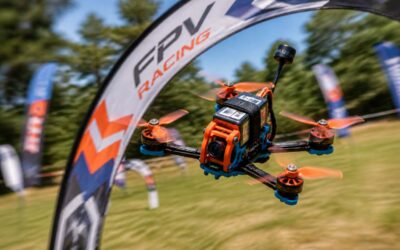
Core components give form to that promise. The frame anchors the craft; motors drive the rotation of propellers; the flight controller conducts each micro-movement; and sensors—from GPS to IMU to optical vision—offer situational awareness. The power system, including batteries and power management, keeps the journey aloft, while the data link carries commands and imagery to the ground.
- Frame, motors, propellers
- Flight controller and sensors
- Power system and battery management
- Data link and payload options
Understanding these pieces helps teams in South Africa navigate constraints and chart routes with confidence, unlocking potential across agriculture, surveying, and media.
Propulsion, flight control systems, and stability
A fresh statistic anchors the scene: across South Africa, nearly 70% of field teams report cutting scouting time in half with drones technology. The sky becomes a workshop where propulsion, control, and balance converge into precise, reliable lift.
Propulsion foundations translate energy into lift through a compact triad of hardware and tuning.
- Propulsion efficiency: motor, propeller, and ESC matched for thrust with minimal heat.
- Flight control integration: IMU, GPS, barometer, and fusion algorithms for stable, predictable motion.
- Stability strategies: vibration damping and wind compensation to maintain smooth hover and clear imagery.
In this evolving realm, propulsion, flight control, and stability underpin operations across agriculture, surveying, and media throughout South Africa’s diverse landscapes.
Battery technology and power management
Across South Africa’s vast landscapes, nearly 70% of field teams report scouting faster and farther thanks to drones technology. In the engine room of that success lies battery technology and smart power management—silent, precise forces turning raw chemistry into dependable lift.
Today’s packs blend energy density with safety. LiPo cells, a robust BMS, and careful thermal pathways guard voltage and temperature, while smarter charging cycles shave minutes from downtime and keep packs calm under pressure.
- Energy density that delivers longer flight without extra weight
- Real-time health monitoring to prevent surprises in the field
- Easy swap-and-go packs for continuous missions
From vineyards to coastal silhouettes, power management remains the quiet backbone of every pursuit, ensuring imagery stays crisp as horizons shift and the wind tries to steal the scene!
Onboard sensors and data processing architectures
Across South Africa’s growing drone corridors, real-time data outpaces field notes by fourfold. This is the quiet revolution of drones technology—sensors waking in unison, turning air into insight. The drone becomes a moving laboratory, translating scenes into signals the eye misses!
Onboard sensors form the craft’s nervous system, turning sight, heat, and distance into live decisions.
- Optical and thermal cameras for immediate scene understanding
- LiDAR or structured-light for precise topography and obstacle awareness
- Multispectral sensors to reveal crop health and soil characteristics
Edge processing keeps computation near the sensors, delivering maps and alerts with negligible latency. We learn to trust this quiet intelligence when the wind tests our patience. Lightweight AI and sensor fusion turn raw streams into actionable outputs while the air still holds the wind.
Flight safety, reliability, and maintenance basics
Across South Africa’s wind-kissed airways, safety becomes a chorus of discipline. In the realm of drones technology, flight safety begins long before takeoff—on the bench with meticulous checks, rugged hardware, and clear operating procedures. In SA training corridors, pilots report a 40% drop in incidents when a formal maintenance rhythm is followed. Reliability grows from a culture that treats maintenance as a ritual, not a reaction.
- Pre-flight inspections of airframe, propellers, and batteries
- Sensor calibration and flight-control system checks
- Firmware updates and GPS/IMU calibration
- Post-flight cleaning, cooling, and fastener verification
With each secure sortie, the craft becomes a patient mentor, turning gusts into data and risk into routine. This is the quiet oracle where maintenance translates into dependable insight and steady skies.
Advanced Drone Technologies
Autonomous flight and AI-driven navigation
Autonomous flight and AI-driven navigation are the punchy wizards behind the curtain of modern drones technology. A recent trend shows autonomous flight can slash data-collection times by up to a third, even in cluttered urban environments. The systems aren’t just autopilot; I see them fuse sensor streams, predictive modeling, and machine learning to chart safe, efficient routes in real time.
In South Africa, this translates to safer wildlife monitoring, agricultural mapping, and disaster response where operators can’t always be on the ground. It’s like giving drones a brain that can reason, not just follow a map.
- Real-time obstacle avoidance that learns from repeated flights
- Edge AI on-board decision making for faster responses
- Adaptive path planning that accounts for wind and terrain
Sensor fusion and perception systems
Across South Africa’s varied landscapes, sensor fusion isn’t just tech—it’s a compass guiding real-world missions. The blend of optical, thermal, and radar streams creates a perception system that sees through clutter and shadows, turning messy data into clear maps. This is a turning point in drones technology.
- Multi-sensor fusion for robust perception across wind and dust
- Real-time obstacle detection and mapping for safer flights
- On-board AI for immediate prioritization and decision-making
With this, operators in agriculture, conservation, and disaster response can plan smarter routes and capture richer data in a single flight. The result is smoother flights and fewer ground crews required!
Vision and computer vision applications in drones
Across South Africa’s varied landscapes, drones technology has turned sight into strategy. High-resolution imagery, thermal streams, and AI-driven analysis fuse into a perception engine that transforms messy data into precise, usable maps. The result is a new kind of situational awareness guiding missions from Karoo farmlands to coastal reserves.
Inside each flight, vision capabilities unfold with practical clarity:
- Real-time object recognition and tracking.
- Multispectral crop health and moisture mapping.
- 3D terrain reconstruction and orthomosaics.
- Edge AI for on-board anomaly detection.
From conservation corridors to emergency response, these vision advances reshape how teams plan, collect, and interpret data—delivering clearer insights without repeating prior topics.
Edge computing and onboard AI accelerators
Edge computing and onboard AI accelerators are turning field data into fast decisions. In South Africa’s rugged landscapes, processing happens on the bird, not in a distant data center, slashing latency and keeping bandwidth gliding along. This isn’t sci‑fi—it’s drones technology maturing into practical, stubbornly reliable workflows. We’re watching missions shift from data dumps to decisions at the source.
Key capabilities unfold in flight:
- Onboard AI accelerators handling real-time anomaly detection and immediate flight adjustments
- Edge computing enables offline operation when cellular networks vanish over the Karoo
- Efficient data compression and low-latency control loops improve mission tempo
Such in‑air processing elevates data quality and safety, letting teams act on insights at the edge with confidence and a touch of swagger.
Collaborative drones and swarm technology
Across South Africa’s rugged farms and coastal plains, swarm-enabled drones are changing fieldwork tempo. In trials, collaborative drone fleets completed multi-site surveys 38% faster than solo flights, turning timing into a strategic edge. This isn’t sci‑fi—it’s drones technology maturing into practical teamwork.
When several drones share sensors and compute, they cover terrain with redundancy and depth, map intricate floodplains, and spot anomalies at their source.
- Coordinated flight paths that close data gaps
- Shared sensing for richer context
- Fault-tolerant operations through peer collaboration
In rural communities, the result is steadier schedules, safer inspections, and faster decisions at the edge. The texture of ground truth—the squeak of a windmill, the dust in a harvest road—meets the precision of technology, carrying opportunity where it’s needed most.
Communication protocols and remote operations
Across South Africa’s wind-swept farms and rugged coastlines, speed isn’t a luxury—it’s a resource. In drones technology, robust communication protocols turn latency into a controllable variable and remote operations into reliable reality. A recent industry pulse shows missions operating from a ground station can slash on-site flight windows by up to 40%, turning planning into real-time advantage. That tempo isn’t sci-fi; it’s the architecture at work.
- Low-latency, multi-band links (RF, LTE/5G) to keep control and data streams in sync
- Mesh networks and relay nodes that stitch coverage across rugged terrain
- End-to-end security, authentication, and fail-safes for field deployments
In practice, remote operations let inspectors, farmers, and rangers stay in the chair while the drone does the legwork. I’ve watched teams replan routes midflight thanks to crisp telemetry and resilient links—proof that the future of drones technology rests on reliable comms as much as clever sensors.
Applications Across Industries
Aerial surveying, mapping, and GIS integration
Across industries, a single drone flight can replace days of fieldwork, cutting data collection times by up to 70%! In South Africa’s busy landscapes, this is more than convenience—it’s a shift in decision speed. This is the power of drones technology in action, enabling aerial surveying, precise mapping, and seamless GIS integration that translate raw terrain into actionable data in real time.
From mining to agriculture, the applications stretch far. The following sectors benefit most:
- Mining and resource exploration for terrain and stockpile analysis
- Agriculture and rangeland management with crop and soil insights
- Construction and infrastructure monitoring for progress and safety
- Utilities and energy inspections, from power lines to wind farms
Agriculture and precision farming insights
In South Africa’s sun-washed fields, drones technology reshapes agriculture. A single drone flight can replace days of fieldwork, cutting data collection times by up to 70% and turning scattered observations into a coherent map of the farm’s health. These aerial insights let farmers see the lay of the land—where moisture pools, where nutrient gaps appear, and where stress takes hold—before it becomes a crisis on the ground.
Across crops—from maize to citrus—precision farming taps into real-time data to tailor inputs, conserve scarce water, and safeguard soil. The power lies in scalable surveying that guides irrigation scheduling, fertilizer placement, and pest scouting with surgical accuracy.
- Canopy vigor mapping and early stress detection
- Soil moisture and drainage profiling
- Targeted, variable-rate inputs for sustainable yields
Together with South Africa’s growing agri-tech ecosystem, this approach blends efficiency with stewardship, turning weathered wisdom into precise action!
Infrastructure inspection and asset management
In South Africa’s heat and horizon, drones technology is rewriting how we watch the built world. A single flight can audit hundreds of meters of infrastructure in minutes—far quicker than scaffolds and ladders—delivering actionable insights while reducing risk.
Infrastructure inspection and asset management demand clear records, not rumors. Bridges, power networks, rail corridors, and urban towers become legible from the air, guiding maintenance and capital planning.
- Bridges and elevated structures
- Power lines, substations, and telecom towers
- Rail corridors and urban transit infrastructure
- Construction sites and façade monitoring
As this drones technology matures in South Africa, it becomes more than data—it is stewardship. Real-time visuals translate into safer operations, longer asset life, and smarter budgeting across sectors.
Emergency response and disaster management use cases
In South Africa, where storms roll in with the flair of a chorus line and time is emergency’s currency, drones technology proves a game changer in emergency response. Real-world deployments show rapid air scenes slash disaster assessment times, turning chaos into actionable insight in minutes rather than hours!
- Rapid search and rescue coordination over impaired terrain
- Real-time hazard mapping for wildfires, floods, and collapsed buildings
- Post-disaster damage assessment to guide relief and claims
- Evacuation planning and medical supply routing with live updates
From hazard mapping to casualty triage, the applications span the spectrum: saving lives, speeding recovery, and shaping resilient planning. This is not mere data—it’s real-time decision power that keeps communities safer.
Delivery, logistics, and last-mile innovations
Across South Africa’s bustling cities and far-flung townships, delivery, logistics, and last-mile networks are being rewritten by drones. In a climate where e-commerce growth meets infrastructure bottlenecks, drones technology acts as a practical bridge between demand and reach. The result is less time on the road and more time delivering confidence to customers and retailers!
- Speedier city core deliveries and township access with reduced street-level delays
- Rural and peri-urban reach, boosting last-mile reliability
- Real-time inventory checks and replenishment at local hubs
Beyond speed, these innovations rewrite risk, cost, and service standards, nudging supply chains toward greater resilience and human-centered planning.
Regulation, Safety, and Ethics
Airspace regulations, certification, and compliance
Sky rules are the new sensor: a single misread clearance can derail a mission and shadow a brand. In South Africa, SACAA defines RPAS regulations, imposing operator registration, remote pilot certification, and continuous airspace awareness. Certification and compliance aren’t mere hurdles—they’re the backbone of safe, predictable flights and the responsible evolution of drones technology in business environments.
- Airspace usage, altitude limits, and NOTAM awareness to prevent mid-mission conflicts.
- Operator and aircraft certification, maintenance logs, and incident reporting for accountability.
- Privacy, data security, and community impact, aligned with POPIA and local guidelines.
Ethics in the air means considering bystanders, protecting sensitive data, and choosing to fly with purpose rather than pressure. When rules guide intent, the skies stay open for innovation and sustainable operations across sectors.
Safety protocols, collision avoidance, and risk assessment
Sky rules are the new sensor—one misread clearance can derail a mission and shadow a brand. In South Africa, drones technology must shoulder a culture of vigilance, where regulation is not a cage but a compass guiding safe, predictable flights.
Safety protocols, collision avoidance, and risk assessment form the backbone of responsible operation.
- Collision avoidance and proactive situational awareness integrated with flight control.
- Comprehensive risk assessment that accounts for weather, terrain, and airspace complexity.
- Transparent incident reporting and disciplined maintenance to sustain accountability.
Ethics in the air means considering bystanders, protecting sensitive data, and choosing to fly with purpose rather than pressure. Privacy, data security, and community impact are not afterthoughts but the wind in the sails of this evolving field.
Privacy, data protection, and ethical considerations
Sky rules are the new sensor—the line between control and chaos sits above us; one clearance misread can derail a mission and shadow a brand. In South Africa, drones technology must shoulder a culture of vigilance, where regulation is a compass guiding safe flights.
Regulation anchors every decision—from licensing and airspace permissions to privacy obligations and liability. It isn’t a cage but a framework that preserves trust and clears the path for responsible operation.
- Licensing and in-country approvals
- Privacy and data protection compliance
- Transparent incident reporting and accountability
Safety grows from proactive planning, weather awareness, and disciplined maintenance. When flight control, risk assessment, and human oversight align, communities feel protection rather than intrusion, and operations stay predictable even under pressure.
Ethics in the air means weighing bystanders, protecting sensitive data, and flying with purpose. Privacy and community impact are not afterthoughts but the wind guiding every mission.
Cybersecurity, encryption, and secure control links
In South Africa’s skies, regulation is the compass that tunes every decision. In drones technology, licensing, airspace permissions, and privacy obligations anchor operations. It isn’t a cage but a framework that preserves trust and clears the path for responsible flight. We can lay down three pillars!
- Regulatory safeguards and in-country approvals
- Data privacy and usage controls
- Accountability through transparent incident reporting
Safety grows from proactive planning, weather awareness, and disciplined maintenance. When flight control, risk assessment, and human oversight align, communities feel protected and operations stay predictable under pressure. Cybersecurity threads through every safeguard—encryption, secure control links, and layered authentication shield signals from tampering.
Ethics in the air means weighing bystanders, protecting sensitive data, and flying with purpose. Privacy and community impact are the wind guiding every mission. In practice, cybersecurity is the backbone of responsible operation, with encryption and secure control links anchoring trust between pilots and payloads.
Environmental impact, sustainability, and waste management
In a nation of wide skies and tight-knit communities, regulation acts as the wind that steadies every flight. A striking 72% of SA operators report fewer incidents when licensing and privacy rules are clear and enforced. Regulation isn’t a cage; it’s the compass guiding every ascent.
Regulatory safeguards and in-country approvals anchor operations. Licensing, airspace permissions, and privacy obligations keep flights aligned with public interest.
- Licensing aligned with the SA Civil Aviation Authority
- Clear airspace access and temporary restrictions
- Privacy impact assessments and data handling
Safety grows from proactive planning, weather awareness, and disciplined maintenance. In drones technology, environmental impact and waste management shape every mission. Sound practices reduce emissions and debris, extending the life of communities and airspace.
Ethics in the air means weighing bystanders, protecting sensitive data, and flying with purpose. Public trust thickens when transparency and accountability accompany every operation.
Future regulatory trends and market outlook
In South Africa, regulation is the sturdy spine of every ascent. A striking stat anchors the mind: 72% of SA operators report fewer incidents when licensing and privacy rules are clear and enforced. Licensing aligned with the SA Civil Aviation Authority keeps flights credible, while clear airspace access guides communities safely below.
- Licensing aligned with the SA Civil Aviation Authority
- Clear airspace access and temporary restrictions
- Privacy impact assessments and data handling
Safety grows from proactive planning, weather awareness, and disciplined maintenance. I watch these shifts with cautious optimism, and they translate into routine checks, durable equipment, and disciplined operational discipline that minimize risk and maximize reliability.
Ethics in the air means weighing bystanders, protecting sensitive data, and flying with purpose. Public trust thickens when transparency accompanies every operation. Looking ahead, future regulatory trends and market outlook suggest harmonized international standards, stronger data sovereignty, and scalable licensing that extend drones technology across South Africa’s economy.

0 Comments