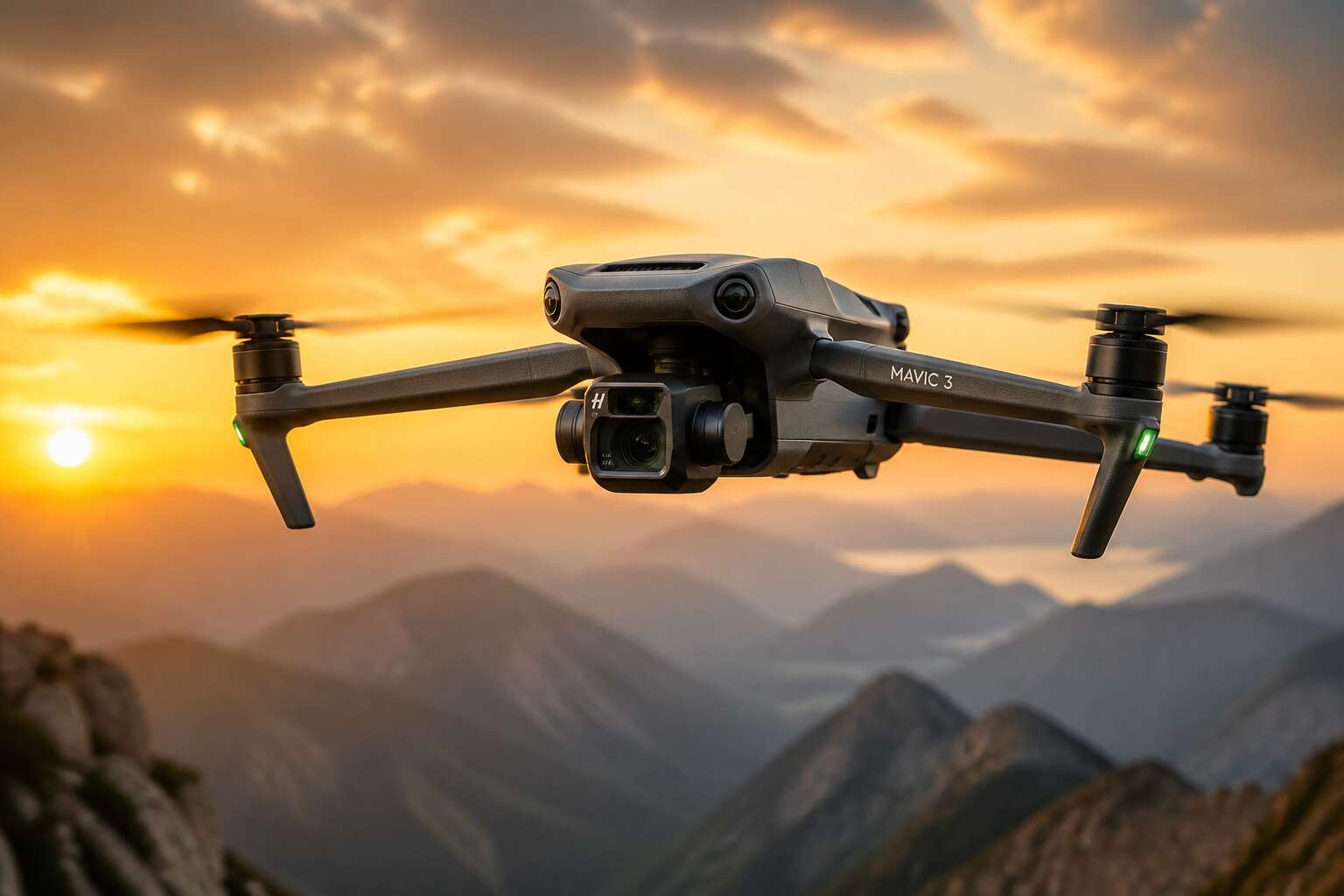
Selecting the Right Aerial Platform for Your Needs
Every pilot in South Africa faces a moment of decision. The right aerial platform determines success more than any camera setting. My first shoot with dji drones felt like trial by fire, and the lessons stuck with me.
Consider your operational environment carefully. High winds near Cape Town demand stability. Dense urban areas require obstacle avoidance. Battery endurance matters for remote Karoo missions, where a failed landing means a long walk.
- Weigh your payload requirements
- Assess the portability factor
- Match the sensor to your lighting conditions
Each choice carries consequences. A compact model offers speed but limits range. A heavy lifter provides flexibility at the expense of agility. So scrutinise your typical flight patterns before you commit.
Camera Systems and Imaging Capabilities
Some of the best footage I have ever captured came from the quiet hum of a drone. Each dji drone is a vessel for light, and the medium format sensor in the Mavic 3 series proves it. Colours bloom softly, preserving shadow detail that other cameras tend to crush. The adjustable aperture gives you precise control over exposure, while the stabilisation system works quietly to keep every frame perfectly sharp, even during sudden gusts.
For specific shots, the imaging stack rewards deliberate attention:
– Hasselblad natural colour science renders skin tones faithfully.
– The telephoto lens compresses distant scenes into intimate portraits.
– Raw format captures retain data for flexible editing.
– HDR video holds highlights without banding.
Every frame offers a new way to see ordinary places from high above.
Flight Performance and Smart Features
Most flyers never touch the throttle’s full range. The flight controller inside these dji drones adjusts motor output thousands of times per second, holding position even in gusty coastal winds. I have watched a Phantom hover over Cape Town’s Atlantic seaboard without drifting a centimeter. That stability is not luck; it is sensor fusion at work.
Smart features now handle the tedious parts of piloting. Obstacle avoidance uses stereoscopic vision, while ActiveTrack lets the aircraft lock onto a subject and follow it cleanly. This makes cinematic shots possible for a single operator!
- Return-to-home with precision landing
- Waypoint navigation for repeatable routes
- Gesture control for hands-free selfies
Battery technology still limits each flight, but intelligent battery management extracts every usable second. For South African creators, these tools turn a complex flight into a smooth task.
Compliance, Safety, and Routine Maintenance
Flying DJI drones over the Karoo is exhilarating, but doing it without a Remote Pilot Licence is how you earn a stern letter from the CAA. South African regulations demand a near-forensic level of documentation. Compliance is not a suggestion, it is a legal requirement.
Safety is where the real comedy begins. A baboon on a mission will not yield to your propeller wash. Keep a healthy distance from wildlife and people, because a camera drone scaring a warthog is not the safari moment you want on record.
Routine maintenance keeps your DJI drones in the air. A quick pre-flight check takes minutes and saves you from a very expensive tree landing. Cultivate non-negotiable habits:
- Check blades for nicks and cracks.
- Verify battery health before every flight.
- Update firmware when new versions appear.
These simple rituals take only minutes, but they keep your gear airborne and your reputation intact.
Maximizing Your Setup with Accessories
The average drone owner treats their flying machine like a prized heirloom, yet flies with the same kit they unpacked on day one. This is a curious oversight, especially when you consider how a modest investment can transform your entire photographic output. The drone itself is only half the story, after all. Your piloting skills and the hardware you strap to this elegant piece of tech determine your success more than any firmware update ever will.
Consider the humble filter set. A neutral density filter is not a luxury item, it is the difference between a cinematic reel and a washed-out home movie. Furthermore, if you fly in Johannesburg or Cape Town, the harsh summer sun demands a polariser to tame the glare on the Winelands.
For my part, I find the ritual of switching out tiny glass panels on a gusty hillside to be mildly comedic, but the results are undeniable. Beyond the lens, you have the practicalities of portability.
– Spare propellers, because a cracked blade ruins a wedding shoot faster than an awkward toast.
– A dedicated landing pad for dusty terrains.
– A multi-charger for prolonged field sessions.
These bits of paraphernalia ensure your day is about the vista, not the voltage. It is a small price for the privilege of seeing more of South Africa from above.

0 Comments