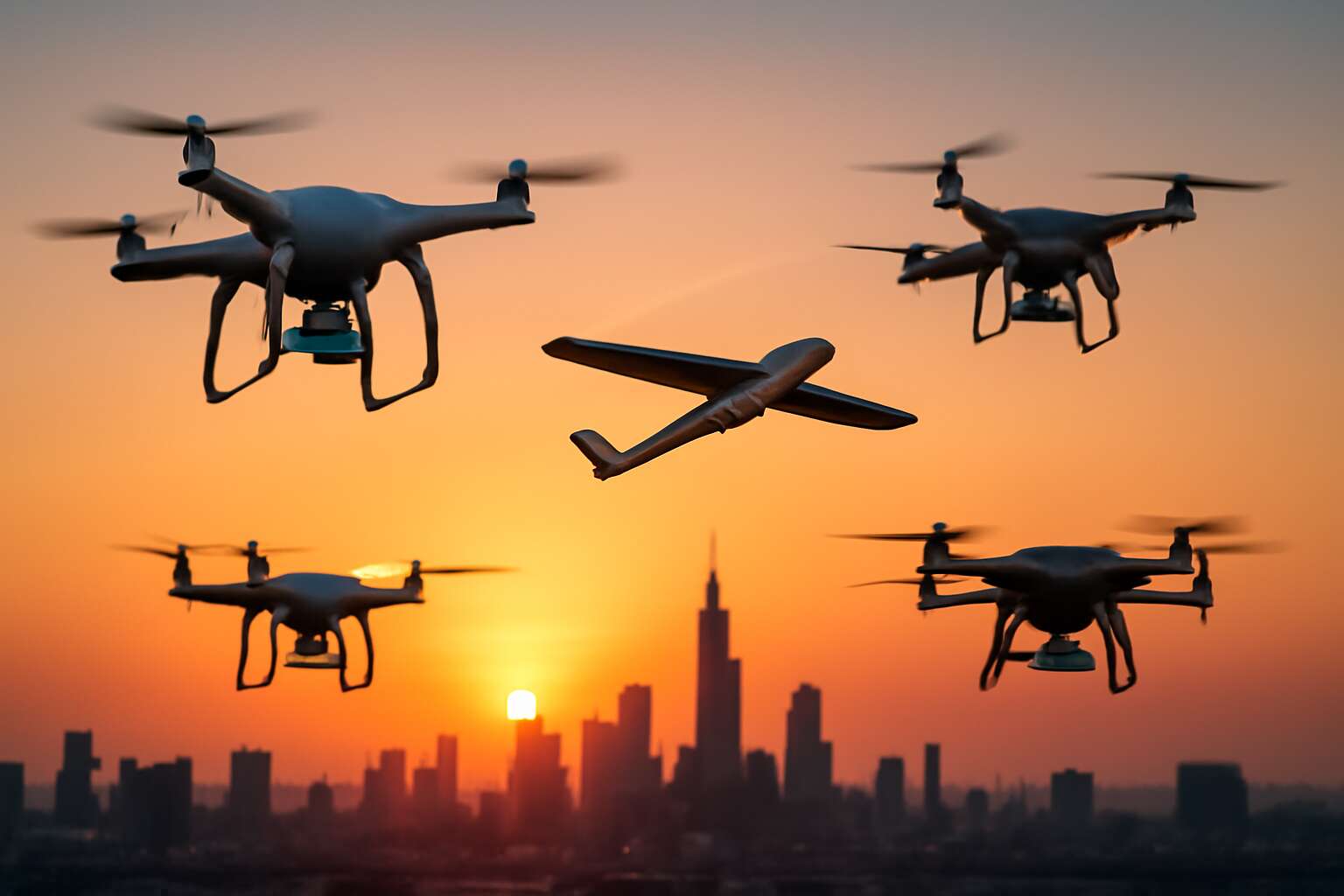
Drone Types Guide
Multirotor Drones
In South Africa, drone usage in farming and security jumped double digits last year, reshaping fieldwork and surveying alike. This drones types guide spotlights multirotor drones—agile, reliable, and capable of staying aloft where others strain. They balance ease of use with professional-grade stability, making them a cornerstone of modern air operations.
Within the drones types landscape, multirotor configurations vary by lift, redundancy, and payload.
- Quadcopters (four rotors): nimble, beginner-friendly, ideal for light surveys
- Hexacopters (six rotors): better lifting power and steadier flight in wind
- Octocopters (eight rotors): maximum redundancy for high-value cameras and sensors
For professionals here, choosing the right multirotor means weighing endurance, payload, and operating environment—desert heat, coastal gusts, or urban corridors. The underlying principle remains: stable flight unlocks precise mapping, reliable inspections, and cinematic capture.
Fixed-Wing Drones
Horizons bow to the wind when fixed-wing drones take to the sky, turning vast landscapes into maps with remarkable speed. In field tests across South Africa, operators report endurance gains and steadier data collection compared with rotor drones, a boon for expansive surveying.
Within the drones types landscape, fixed-wing designs offer sustained forward flight, efficient lift, and the ability to cover kilometres on a single outing. They typically require a launch method such as rolling takeoff or catapult and a prepared landing zone, but the payoff is large-area coverage and linear transect accuracy for long-range mapping.
- Large-area agricultural and forestry mapping
- Coastal and floodplain surveillance along long transects
- Infrastructure inspections over linear corridors like roads and pipelines
In South Africa’s diverse terrain, fixed-wing drones complement multirotors by extending reach while preserving data integrity and speed.
Hybrid and VTOL Drones
In the South African skies, drones types known as hybrids and VTOLs are rewriting flight narratives. Field trials across coastal and savanna routes show endurance gains of up to 40% when transitioning to fixed-wing cruise, transforming how surveys unfold in real time.
Hybrid VTOLs lift off with ease and then marry wings for longer legs, delivering precise hover for detail and economical cruise for distance. They glide through mixed terrain, turning tight corridors into clear data streams without the logistical drag of separate launch and recovery methods.
- Seamless vertical takeoff and landing without runways
- Efficient fixed-wing cruise extends mission endurance
- Adaptive payloads hold stable across changing wind and light
Among drones types, hybrids offer a poetic pragmatism—ready for fieldwork from the coastline to the savannah, keeping data and speed in a tightly braided flight pattern.
Specialty Drones and Niche Types
Across South Africa’s skies, niche drone types are turning every survey into a scalpel-edged operation! Field trials show specialty payloads boosting data clarity by up to 40% in rugged coastlines and savannah corridors.
From pocket-sized microdrones for confined spaces to long-endurance inspection platforms, specialty drones deliver targeted capabilities. They complement standard drones types by offering sensory augmentation, such as thermal cameras, LiDAR, or multispectral sensors, to extract precise insights under variable wind and light.
Examples include:
- Microdrones for indoor or cluttered environments
- Thermal-enabled inspection drones for wildlife corridors and solar farms
- Agricultural and environmental survey drones with multispectral payloads

0 Comments